

 en
en  English
 Español
 عربى
عربى
When you start a new packaging project, material selection often feels like a decision that should be easy: pick a plastic, make a mold, and run a prototype. In reality, the choice of prototype material shapes every downstream step: trial performance, mold adjustments, regulation approvals, and even per-part cost. The practical approach is to start with the end use and validation goal, then narrow material candidates using mechanical performance, thermal behavior, process compatibility, and supplier reliability. This article walks through those considerations in a way that can be applied directly to thermoforming and vacuum forming projects.
Start with the End Use, Not the Material List
Most failures in prototype material selection happen because teams begin with a shortlist of materials instead of defining what the prototype must prove. Does the part need to survive a drop test? Does it need to hold a liquid for 72 hours? Does it need to pass FDA food contact requirements? Every answer pushes you toward a different material.
Start with realistic scenarios. A beverage cup lid usually needs transparency, adequate stiffness, and resistance to cold or warm temperatures. A lunch box might need oil resistance and microwave safety. If you skip this step, you risk selecting a material that looks fine on paper but fails in a simple kitchen test.
Prototype material selection is not about finding the most advanced material. It is about finding the material that answers the specific question your prototype is designed to solve.
Match Material Performance to Prototype Goals
Prototypes are not all the same. A concept model, a functional prototype, and a pilot run each require a different material strategy. Treating them identically leads to waste. You either overspend on a concept model or underspecify a pilot run.
At the concept stage, the main goal is to check shape and ergonomics. Low-cost materials like foam, soft tooling, or additive manufacturing resins are enough. At the functional stage, you need performance close to production material, such as impact strength and heat resistance. At the pilot stage, use the actual production material with a production-intent mold so that shrinkage, cycle time, and output are realistic.
| Prototype Stage | Primary Goal | Material Approach | Cost Impact |
|---|---|---|---|
| Concept | Visual, shape, ergonomics | Soft tooling, additive | Low |
| Functional | Mechanical, thermal validation | Production-grade resin, CNC | Medium |
| Pilot | Process, output, quality check | Production material, production mold | High |
Key Material Properties That Drive Selection
Once the prototype goal is clear, evaluate the material candidates against a short set of measurable properties. Four properties matter most for food packaging and container prototypes: mechanical strength, heat deflection, shrinkage, and regulatory compliance.
Tensile strength and impact strength tell you if a cup can survive stacking and transport. Heat deflection temperature (HDT) tells you if a lid can handle hot filling or microwave heating. Shrinkage affects dimensional accuracy and mold design. PVC and PET behave differently, and a wrong assumption can produce a lid that does not fit a cup. For food contact, compliance with FDA requirements for food packaging materials is non-negotiable.
| Property | Why It Matters | Practical Example |
|---|---|---|
| Tensile Strength | Resists breakage during handling | Stacked cups in a warehouse |
| Impact Strength | Absorbs shock during shipping | Dropped container |
| Heat Deflection | Tolerates hot fill or microwaving | Hot soup bowl |
| Shrinkage | Controls final dimensions | Lid-to-cup fit |
How Mold Design Affects Prototype Material Choice
Mold design is often overlooked during material selection, but it is directly tied to prototype performance. The same material can form differently depending on draft angle, radius, gate location or vacuum ports, and cooling channel layout. A material that flows easily and cools uniformly will be easier to run, while a less forgiving material will expose every mold geometry mistake.
In thermoforming, the material needs sufficient melt strength for stretching over the mold surface. Thin-wall cup lids, for example, require a material that can stretch without tearing. If the prototype material is too brittle, the mold may need additional draft or a different temperature control strategy. This is why prototype material selection should happen together with mold design discussion, not after the mold is already cut.
High melt strength reduces tearing during stretching.
Insufficient draft can cause sticking and dimensional issues.
Uniform cooling reduces warpage in thin-wall parts.
Paper bowl lids, for example, need a material that can handle both the pouring temperature and the lid sealing process. A paper bowl lid thermoforming mold supplier can help you match the material to the sealing platform. Suppliers with experience in milk tea cup thermoforming mold design can help you adjust material and geometry together before you freeze the design.
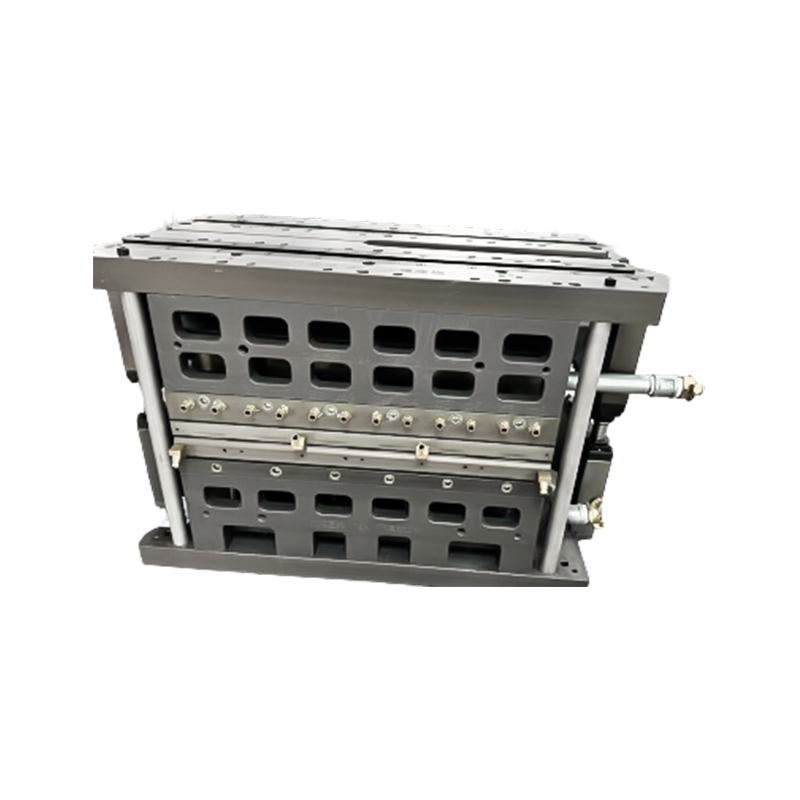 High-Quality Thermoforming Mold for Milk Tea CupsDesigned for milk tea cups, this mold ensures uniform wall thickness and a rounded rim, compatible with various plastic sheets. Its efficient cooling and automation readiness boost production speed and consistency.View Product →
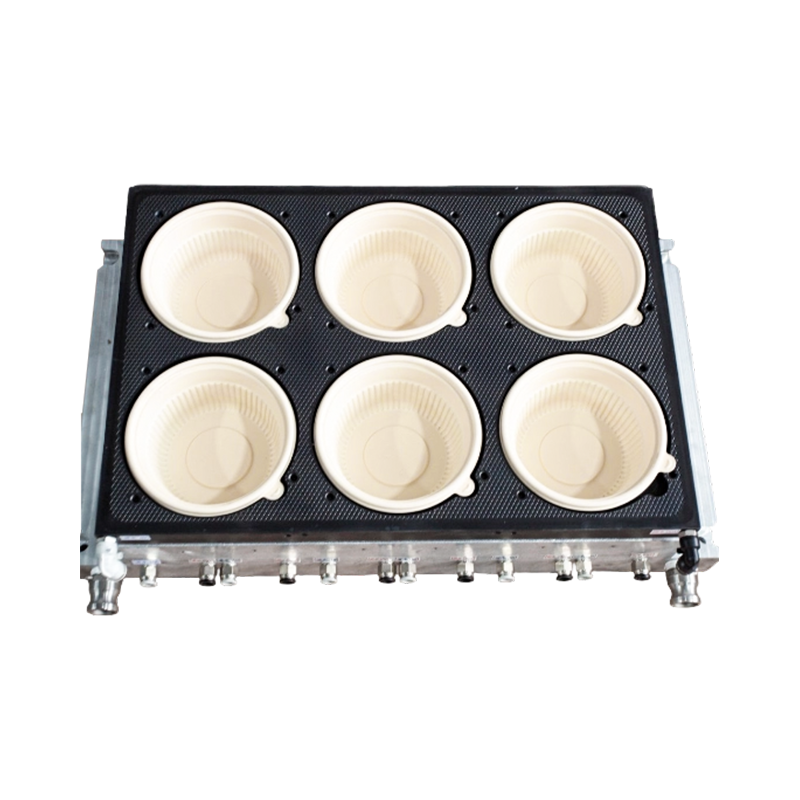
 Precision Thermoforming Mold for Paper Bowl LidsThis mold is engineered for food packaging lids, offering precise dimensions and smooth edges to ensure a tight seal with paper bowls. Its durable construction and optimized cooling support efficient high-speed production.View Product →
Process Compatibility: Thermoforming vs. Injection Molding
Material selection cannot be separated from the forming process. Thermoforming and injection molding place different demands on the same polymer. Thermoforming heats a sheet and stretches it over a mold, so the material needs high melt strength and uniform thickness. Injection molding pushes molten material into a closed cavity, so high flowability and fast cooling are usually more important.
For most packaging cups, lids, and containers, thermoforming is a practical choice when you need large surface areas, thin walls, and moderate production volumes. It also means the prototype material should be evaluated in sheet form before the mold is built. The molding process differences should be understood before making a final decision. See our comparison of key differences between thermoforming and injection molding for more detail.
Cost, Lead Time, and Procurement Risks
Prototype material choice has a direct effect on project cost, but the cost that matters is not the price per kilogram. It is the total cost of getting a usable prototype. A slightly more expensive material that prevents mold changes and reduces rework usually delivers better return than a cheap material that creates scrapped parts.
Lead time is another factor. Standard materials like PET, PVC, and PS are available quickly. A custom color or special grade can add weeks to the schedule. If your project has a fixed launch date, choose from standard material grades unless the performance requirement really justifies custom resin.
Procurement risk is often underestimated. Batch-to-batch consistency, supplier quality control, and the ability to provide test reports all matter once you move from prototype to small-scale production. Work with a supplier that can support material traceability and review sample performance before committing to a full mold.
For lunch box development, the mold design and material choice must align with stacking strength and hinge performance. A rectangular clamshell packaging box thermoforming mold is a practical example of how geometry and material interact in a disposable container.
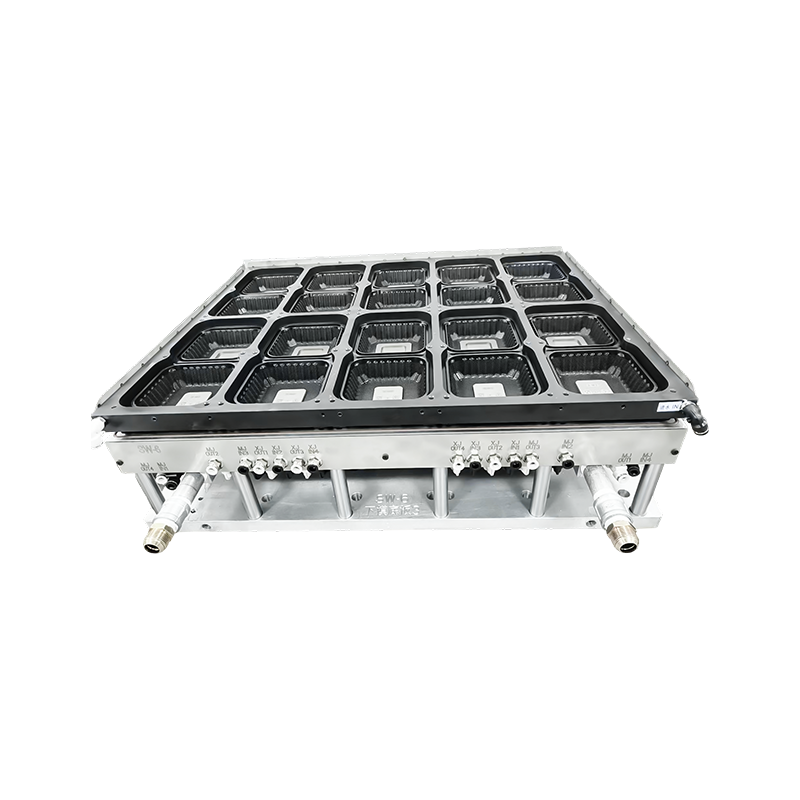
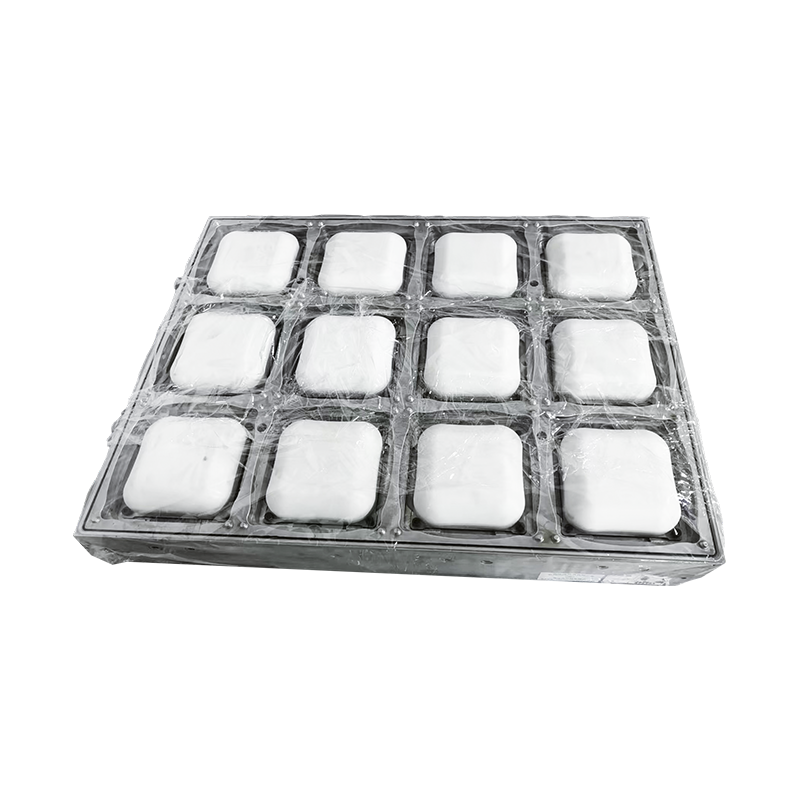 Thermoforming Mold for Rectangular Clamshell Takeout BoxesThis mold produces one-piece rectangular clamshell boxes with a secure seal, utilizing precision CNC-machined aluminum. It supports multi-cavity designs and smooth demolding for reliable, high-volume takeout packaging.View Product →
Common Mistakes to Avoid
Even with a clear material strategy, teams repeat the same mistakes. The first is comparing only material price per kilogram, ignoring the cost of rejected parts, mold rework, and lost time. The second is underestimating shrinkage and warpage, especially when the prototype material differs from the production material. The third is skipping real trials with the actual forming machine and mold, trusting theoretical datasheets instead. Finally, compliance is often treated as an afterthought, but food contact regulations require documentation from the start.
These mistakes are avoidable. A short, disciplined prototype campaign with the right material and the right mold will save money in the long run.
FAQs
Q1: What is the best prototype material for food packaging?
For food packaging prototypes, the best material depends on the application. PET offers good clarity and impact resistance, while PP is suitable for microwave-safe containers. Always verify compliance with FDA regulations before selecting material for food contact applications.
Q2: How do I choose between PET and PVC for thermoforming prototypes?
PET is generally preferred for food contact due to lower regulatory concerns and good clarity. PVC has a lower cost and can be easier to thermoform, but it has specific shrinkage behavior and may need more careful mold design. Review the shrinkage allowance for PVC vs PET when designing your prototype mold.
Q3: Can I use the same prototype material and production material?
Yes, whenever possible. Using the same material helps validate real performance, shrinkage, and cycle time. However, if a lower-cost material is acceptable for a concept model, you can still switch to production material later.
Q4: How much does prototype material selection affect project cost?
The material itself is usually a small portion of total project cost. The bigger impact comes from how material behavior influences mold design, trial iterations, rejection rates, and launch timing. The right material can reduce the number of mold fixes and accelerate product launch.