

 en
en  English
 Español
 عربى
عربى
In the fast-paced world of food service and beverage packaging, the humble cup lid is a critical component for safety, convenience, and branding. At the heart of producing these ubiquitous items lies a specialized piece of engineering: the disposable plastic cup lid thermoforming mold. This guide delves deep into the technology, design considerations, and selection process for these molds, providing manufacturers with the knowledge needed to make informed decisions for their production lines. For nearly two decades, Suzhou Huashang Mould Co., Ltd. has been at the forefront of this niche, leveraging expertise in blister mold design and manufacturing to serve a global clientele across diverse industries.
Understanding Thermoforming Molds for Cup Lids
Thermoforming is a manufacturing process where a plastic sheet is heated to a pliable forming temperature, formed to a specific shape in a mold, and trimmed to create a usable product. The mold is the decisive factor in this process, determining the lid's final geometry, dimensional accuracy, and production speed.
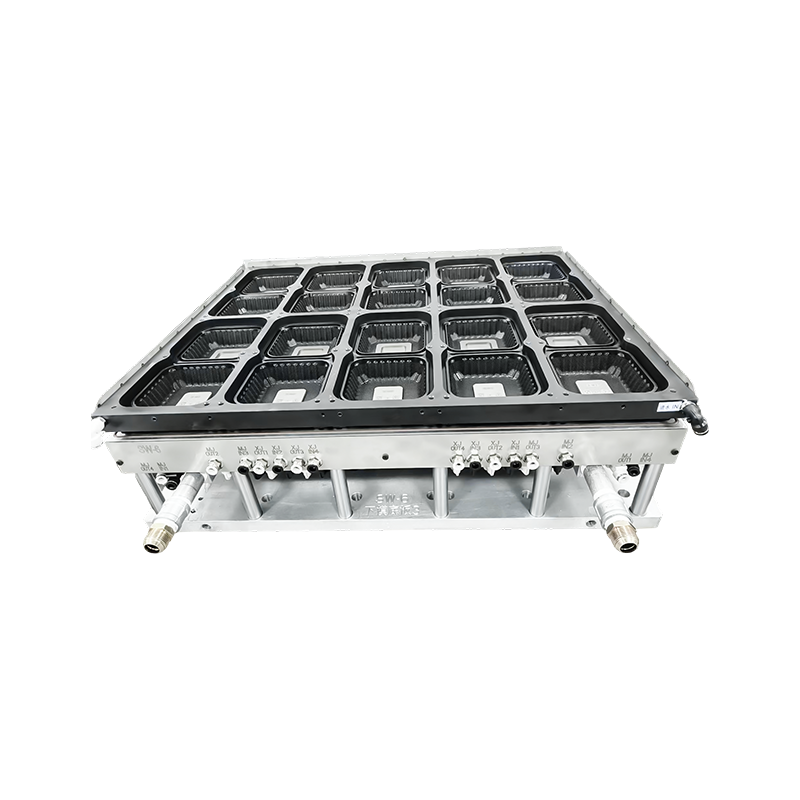
Key Components of a High-Quality Lid Mold
- The Mold Base: The foundation, typically made from aluminum or steel, which houses all other components.
- Cavities: The negative impressions that define the shape of each individual lid.
- Cooling Channels: An internal network for circulating water or oil to solidify the plastic quickly.
- Cutting Edges (Trimming System): Integrated blades or mechanisms to cut the formed lids from the plastic sheet.
- Vacuum/Pressure Ports: Small holes that apply vacuum or pressure to pull/push the soft plastic into the cavity details.
- Ejection System: Pins or air blasts to release the finished lid from the cavity.
Thermoforming vs. Injection Molding for Lids
While both processes produce plastic lids, thermoforming offers distinct advantages for high-volume, thin-walled products like disposable lids. The primary differences lie in cost, speed, and flexibility.
| Factor | Thermoforming Mold | Injection Mold |
|---|---|---|
| Tooling Cost | Generally lower, especially for multi-cavity molds. | Typically higher due to more complex machining. |
| Production Speed | Extremely high, suitable for mass production. | Fast per cycle, but often fewer cavities per mold. |
| Material Waste | Generates trim waste which can often be recycled in-line. | Minimal waste (sprues and runners). |
| Design Flexibility | Excellent for large, thin-walled parts with undercuts. | Better for complex, thick-walled parts with intricate details. |
| Lead Time for Mold | Often shorter due to less complex machining. | Usually longer. |
For manufacturers focusing on disposable lids, thermoforming is often the more economical and efficient choice [1].
1. custom disposable cup lid mold design
Off-the-shelf solutions rarely suffice for unique branding or functional requirements. A custom design process is essential.
- Collaborative Process: It begins with a detailed consultation to understand lid function, stacking requirements, and sealing profiles.
- Prototyping: Using advanced CAD software and sample forming machines, like those at Suzhou Huashang Mould Co., Ltd., to create functional prototypes.
- Iteration: Testing and refining the design before full-scale mold manufacturing begins.
2. high speed thermoforming mold for plastic lids
In high-volume environments, every second counts. A mold engineered for speed maximizes output and ROI.
- Optimized Cooling: Efficient cooling channel design is paramount to reduce cycle time.
- Durable Materials: Using high-grade aluminum or treated steel to withstand rapid, continuous cycling.
- Precision Engineering: Ensuring perfect alignment and smooth operation at high speeds to prevent jams or defects.
3. PP PS plastic cup lid making mold
Material selection directly impacts mold design. Polypropylene (PP) and Polystyrene (PS) are the two most common lid materials, each with different processing needs.
| Material Property | Impact on Mold Design |
|---|---|
| PP (Polypropylene) | Requires lower forming temperatures. Molds need excellent venting to avoid vacuum holes clogging due to PP's stringiness. |
| PS (Polystyrene) | Forms at a higher temperature and is more brittle. Molds require sharper cutting edges for clean trimming and slightly different cooling profiles. |
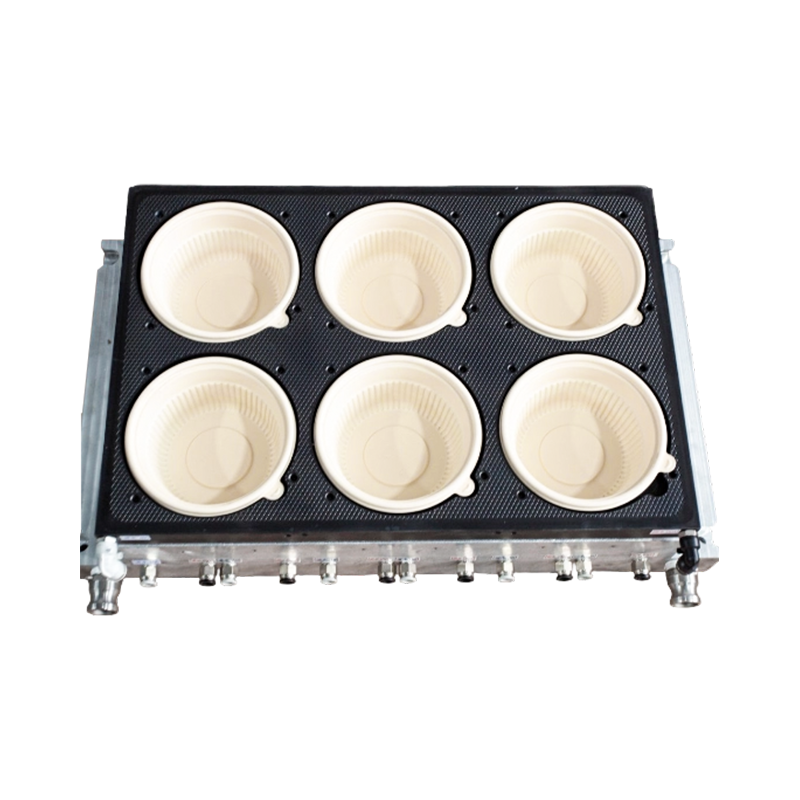
4. multi cavity blister mold for cup lids
Maximizing each machine cycle is the goal of multi-cavity molds, a specialty in blister mold manufacturing.
- Cavity Layout: Strategic arrangement on the mold plate to ensure even material distribution and uniform cooling.
- Balanced Flow: Engineering the vacuum/pressure system so each cavity forms with identical quality.
- Maintenance Access: Designing for easy cleaning and maintenance of individual cavities without stopping the entire mold.
5. thermoforming mold cooling plate design
The cooling plate, or chill plate, is a critical sub-component that directly affects production speed and part warpage.
- Function: It sits behind the mold cavity, absorbing heat from the newly formed plastic lid.
- Design Complexity: Advanced designs feature conformal cooling channels that follow the contour of the lid for uniform heat extraction.
- Outcome: Superior cooling plate design leads to faster cycle times and dimensionally stable, flat lids [2].
Selecting the Right Mold Manufacturer: Beyond the Quote
Choosing a partner for your disposable plastic cup lid thermoforming mold is a strategic decision. Key criteria extend far beyond initial price.
Technical Expertise and Experience
- Look for a manufacturer with a proven track record in custom disposable cup lid mold design.
- Assess their familiarity with different materials like PP PS plastic cup lid making mold requirements.
- Visit the facility if possible, like the 3,000 sq.m. factory of Suzhou Huashang Mould Co., Ltd., to see CNC equipment and sample forming capabilities firsthand.
Production Capacity and Quality Control
- Ensure they can handle your volume, potentially with multi cavity blister mold for cup lids.
- Inquire about their QC procedures for mold steel, machining accuracy, and final testing.
- Ask about their capability in critical areas like thermoforming mold cooling plate design.
Service and Post-Sale Support
- A reliable partner offers comprehensive service, from design assistance to troubleshooting during production ramp-up.
- They should understand the urgency of maintenance or modifications to keep your high speed thermoforming mold for plastic lids running smoothly.
Innovations and Future Trends in Lid Mold Manufacturing
The industry is evolving towards greater efficiency, sustainability, and intelligence.
- Additive Manufacturing for Conformal Cooling: 3D printing is revolutionizing thermoforming mold cooling plate design, allowing for intricate internal channels that dramatically improve cooling efficiency [3].
- IoT and Predictive Maintenance: Sensors embedded in molds can monitor temperature, pressure, and cycle counts, predicting maintenance needs before downtime occurs.
- Lightweighting and Material Efficiency: Molds are being precision-engineered to produce lids with less material without compromising strength, responding to environmental and cost pressures.
Conclusion
Investing in a well-designed and precisely manufactured disposable plastic cup lid thermoforming mold is fundamental to successful packaging production. By focusing on critical aspects such as custom disposable cup lid mold design, engineering for high speed thermoforming mold for plastic lids, and understanding material-specific needs for a PP PS plastic cup lid making mold, manufacturers can achieve unparalleled efficiency and quality. The advantages of a multi cavity blister mold for cup lids are clear for volume production, while advanced thermoforming mold cooling plate design pushes the boundaries of cycle time. Partnering with an experienced, capable manufacturer like Suzhou Huashang Mould Co., Ltd., with its dedicated design team and extensive machining resources, ensures that this crucial investment delivers reliable performance and a strong competitive edge for years to come.
Frequently Asked Questions (FAQ)
1. What is the typical lead time for a custom disposable cup lid thermoforming mold?
Lead time varies based on complexity, cavity count, and manufacturer workload. For a standard multi-cavity mold, it typically ranges from 8 to 14 weeks. This includes design, machining, sampling, and testing. Suzhou Huashang Mould Co., Ltd. emphasizes on-time delivery and can provide a precise timeline after design finalization.
2. How do I choose between aluminum and steel for my lid mold?
The choice depends on production volume and material. Aluminum molds offer excellent heat transfer (faster cooling), are lighter, and generally have a lower initial cost. They are ideal for high-speed production of PP or PS lids. Steel molds are more wear-resistant and are chosen for extremely long production runs or for materials that are more abrasive.
3. Can one mold produce lids for different cup sizes?
Generally, no. A mold is precision-machined for a specific lid diameter and sealing profile. To change sizes, you would need interchangeable mold inserts or a completely different mold plate. The sealing function requires very tight tolerances that are unique to each cup specification.
4. What file format do you need to start the design of a custom mold?
Most manufacturers prefer industry-standard 3D CAD files, such as STEP (.stp) or IGES (.igs) formats. These provide accurate geometric data. Alternatively, a detailed 2D drawing with all critical dimensions, tolerances, and a physical sample of the desired lid can also be used to begin the custom disposable cup lid mold design process.
5. How can I improve the cycle time of my existing thermoforming mold for lids?
Cycle time is often limited by cooling efficiency. Upgrading the thermoforming mold cooling plate design with more efficient channels, ensuring water flow is at the correct temperature and pressure, and optimizing the forming heater timing are common strategies. A mold audit by an experienced engineer can identify specific bottlenecks.
References
[1] Throne, J. L. (2008). *Understanding Thermoforming*. Hanser Publishers. (Reference for thermoforming process advantages).
[2] Fischer, J. M. (2012). *Handbook of Molded Part Shrinkage and Warpage*. Plastics Design Library. (Reference for cooling design impact on part quality).
[3] Diegel, O., et al. (2019). *A Practical Guide to Design for Additive Manufacturing*. Springer. (Reference for additive manufacturing in mold cooling applications).