What types of cup lids can be produced using a milk tea cup lid thermoforming mold?
Overview of cup lid production using thermoforming technology
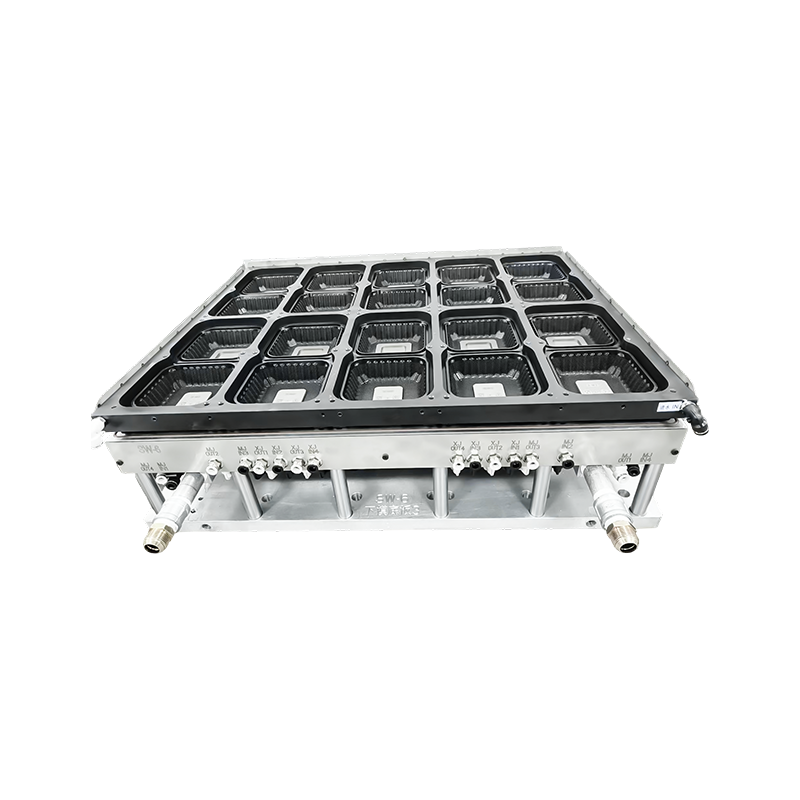
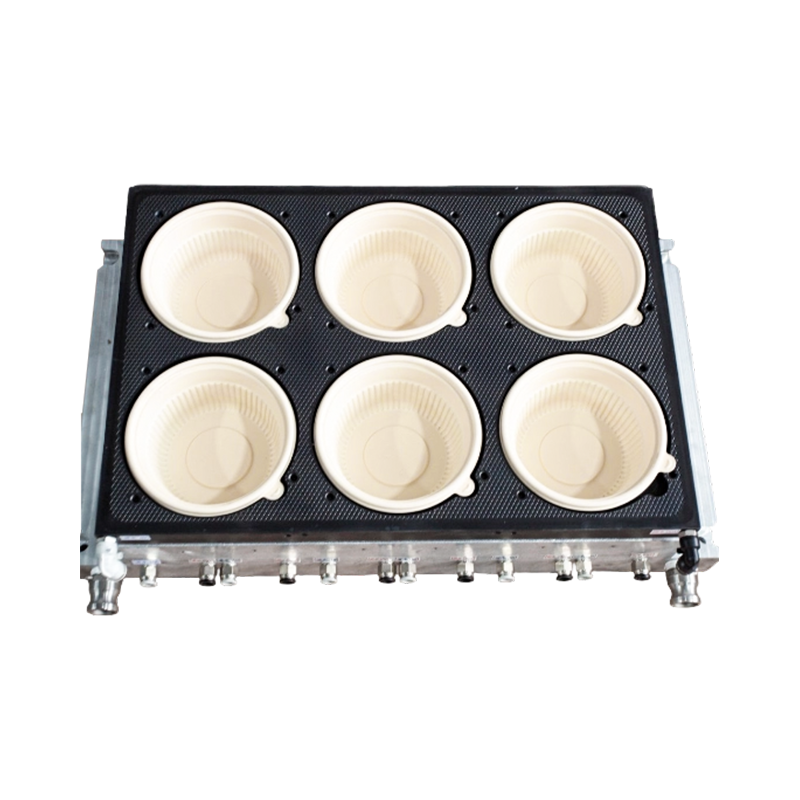
Thermoforming has become a mainstream manufacturing method for beverage packaging due to its stability, efficiency, and suitability for mass production. In the context of milk tea and similar drinks, cup lids must meet multiple functional requirements, including sealing performance, compatibility with different cup shapes, food safety compliance, and consistent appearance. A milk tea cup lid thermoforming mold is specifically engineered to meet these requirements by shaping heated plastic sheets into precise lid structures through controlled heating, forming, and cooling processes.
From a production perspective, this type of mold supports a wide range of food grade plastic materials such as PP, PET, PS, and PLA. These materials are widely used in beverage packaging because they provide an appropriate balance between rigidity, transparency, heat resistance, and sustainability considerations. By relying on a high precision forming structure, thermoforming molds ensure that each lid maintains stable dimensions and uniform thickness, which is essential for automated filling and sealing lines.
Suzhou Huashang Mould Co., Ltd. has accumulated long term experience in blister mold design and manufacturing, allowing thermoforming molds for milk tea lids to be developed with strong process adaptability. The company integrates design, CNC machining, and process optimization, ensuring that mold structures are aligned with real production conditions rather than theoretical assumptions. This practical orientation is particularly important when producing diverse lid types for high volume beverage markets.
Overall, thermoforming molds play a decisive role in determining what types of cup lids can be produced. Their design flexibility, material compatibility, and structural precision directly define the range of lid styles, functional features, and production efficiency achievable in milk tea packaging.
Flat lids and standard sealed lids
Flat lids and standard sealed lids represent the most commonly used cup lid types in milk tea and cold beverage applications. These lids are designed to fully cover the cup opening and provide a reliable seal to prevent leakage during transportation and handling. A milk tea cup lid thermoforming mold is particularly suitable for producing this category of lids because of its ability to control edge geometry and sealing surfaces with high accuracy.
In flat lid production, the mold cavity is designed to maintain uniform thickness across the entire lid surface. This uniformity ensures consistent rigidity and prevents deformation during stacking or sealing. The sealing rim is carefully machined to match standard cup dimensions, allowing the lid to snap or heat seal securely onto the cup. Thermoforming technology allows this rim structure to be formed in a single cycle, improving production efficiency and reducing variability.
Sealed lids may include additional design elements such as thin membrane areas that can be pierced by straws or sealed film layers applied after forming. By using thermoformed milk tea lid molds, manufacturers can achieve stable forming results while maintaining compatibility with downstream sealing equipment. Precise temperature control within the mold helps prevent defects such as uneven edges or incomplete forming, which are common concerns in high speed production.
Straw hole lids and cross cut lids
Straw hole lids are specifically designed to allow consumers to insert straws easily while maintaining reasonable sealing performance before use. These lids typically include a pre formed hole, cross cut, or thin breakable area in the center or offset position. A milk tea cup lid thermoforming mold supports this type of lid by integrating precise core structures and venting systems that define the straw opening during forming.
The challenge in producing straw hole lids lies in balancing material thickness and functional strength. If the hole area is too thin, it may tear prematurely. If it is too thick, straw insertion becomes difficult. Thermoforming molds address this issue by controlling localized thickness through cavity depth and material flow paths. This allows the straw area to remain functional while preserving the overall rigidity of the lid.
From a tooling perspective, the mold must ensure that straw hole features are consistently formed across large production batches. This consistency is essential for automated straw insertion and packaging operations. Custom thermoforming molds for milk tea cup lids enable manufacturers to adjust hole diameter, cross cut geometry, and placement based on specific product requirements or regional preferences.
Snap lids and press fit lids
Snap lids and press fit lids are designed to be easily applied and removed, making them suitable for beverages that may require resealing. These lids rely on carefully engineered locking structures along the rim, which engage with the cup edge through mechanical interference. A milk tea cup lid thermoforming mold plays a critical role in forming these locking features accurately.
The snap structure typically includes inward or outward protrusions that must maintain dimensional precision to ensure reliable engagement. Thermoforming molds use CNC machined cavities to define these features with high repeatability. Proper cooling design within the mold helps stabilize these structures after forming, preventing deformation that could affect snap performance.
Press fit lids require a balance between flexibility and strength. The mold must allow for slight elastic deformation during application while ensuring the lid returns to its original shape. By using aluminum alloy or stainless steel mold materials with good thermal conductivity, the forming process remains stable and controllable.
Convex lids and dome shaped lids
Convex lids, also known as dome shaped lids, are commonly used for beverages topped with foam, cream, or fruit toppings. These lids provide additional vertical space while maintaining a secure seal with the cup. Producing this lid type requires precise control over forming depth and surface smoothness, making milk tea cup lid thermoforming mold technology particularly suitable.
The dome structure increases the complexity of material flow during forming. Thermoforming molds address this by optimizing cavity geometry and vacuum distribution, ensuring that heated plastic sheets conform evenly to the dome shape without thinning excessively at the top. This results in a stable structure capable of protecting the beverage presentation.
Surface quality is another important factor for convex lids. Smooth and uniform surfaces enhance visual appeal and reduce the likelihood of cracks or stress marks. High precision machining and surface finishing within the mold contribute directly to achieving this quality standard.
Special shaped lids and customized designs
Beyond standard geometries, many beverage producers require special shaped lids to match unique cup designs or brand concepts. These may include oval shapes, asymmetric forms, or lids with integrated functional features. A milk tea cup lid thermoforming mold is well suited for such customization because thermoforming allows flexible cavity design without excessive tooling complexity.
Customized molds are typically developed based on samples, drawings, or cup data provided by the client. Through careful design validation and CNC machining, special shaped lids can be produced with consistent dimensions and reliable sealing performance. Thermoforming molds support rapid design iteration, making them suitable for evolving packaging trends.
In customized lid production, modular mold structures are particularly valuable. They allow specific components to be modified or replaced without affecting the entire mold. This reduces cost and lead time while maintaining production stability.
Suzhou Huashang Mould Co., Ltd. combines design resources and manufacturing capacity to support personalized packaging solutions. With multiple CNC machines and dedicated forming equipment, the company ensures that customized lid molds meet both functional and production efficiency requirements.
Material compatibility and lid type selection
The types of cup lids that can be produced are closely linked to material selection. A milk tea cup lid thermoforming mold is designed to process a range of food grade plastic sheets, each with distinct characteristics.
| Material |
Common lid types |
Key characteristics |
| PP |
Flat lids, snap lids |
Good heat resistance, balanced rigidity |
| PET |
Convex lids, sealed lids |
High transparency, stable forming |
| PS |
Straw hole lids |
Easy forming, smooth surface |
| PLA |
Flat lids, sealed lids |
Biodegradable, suitable for eco focused packaging |
Material behavior during heating and cooling directly influences mold design parameters such as temperature control, venting, and cooling channels. By supporting multiple materials, thermoforming molds enable manufacturers to adjust lid types based on functional needs, cost considerations, or sustainability goals.
Suzhou Huashang Mould Co., Ltd. maintains strict procedures for raw material evaluation and incoming material testing, ensuring that mold designs are compatible with stable material performance. This approach reduces production risks and supports consistent lid quality across different material options.
Production efficiency and quality consistency across lid types
Regardless of lid type, production efficiency and quality consistency remain core concerns for manufacturers. A milk tea cup lid thermoforming mold contributes to these goals through optimized blister channel design, precise temperature control, and durable mold materials.
Efficient vacuum and cooling systems shorten cycle times without compromising forming accuracy. This allows high volume production while maintaining consistent lid geometry and sealing performance. Long mold life and simple maintenance further contribute to controllable production costs.
Suzhou Huashang Mould Co., Ltd. benefits from its geographical location and integrated management structure, enabling reduced transportation and labor costs. Combined with sufficient production capacity and stable raw material supply, this foundation supports continuous and reliable mold production for various cup lid types.
By aligning mold design with real production demands, thermoforming molds ensure that different lid types can be manufactured efficiently and consistently, supporting the long term needs of beverage packaging operations.
Frequently asked questions about milk tea cup lid thermoforming mold
What types of lids are most commonly produced using a milk tea cup lid thermoforming mold?
Flat lids, sealed lids, straw hole lids, snap lids, and convex lids are the most common types, depending on beverage application and packaging requirements.
Can one mold produce multiple lid designs?
With modular design, certain components can be adjusted to support variations, but distinct lid structures usually require dedicated mold cavities.
Is the mold suitable for biodegradable materials?
Yes. Thermoforming molds can process PLA and other biodegradable sheets when temperature control and forming parameters are properly designed.
How does mold precision affect sealing performance?
High precision machining ensures consistent rim dimensions, which directly improves sealing reliability and reduces leakage risks.
What factors influence mold service life?
Material selection, machining quality, cooling efficiency, and maintenance practices all contribute to long term mold stability and performance.
If you would like, I can also adapt this article for SEO optimization, adjust keyword density, or localize the content for specific export markets.



 en
en  English
 Español
 عربى
عربى