

 en
en  English
 Español
 عربى
عربى
Three weeks ago, a packaging manufacturer from Chengdu asked us to quote a 48-cavity milk tea cup lid mold. The first question was not about price. It was about the sealing surface: could we hold a 0.05 mm flatness on a lid rim formed at a 0.38 mm wall thickness? That tolerance decides whether the lid passes a leak test, releases cleanly from the mold, and runs steadily on a high-speed forming line.
Here is the conclusion we give every buyer: in disposable packaging, the mold is where quality, output, and unit cost are decided. Forming machines, plastic sheets, and trim tools all matter, but the mold turns those inputs into a consistent product. Choosing a disposable packaging mold manufacturing partner is therefore a production decision, not just a procurement routine. Suzhou Huashang Mould has designed and machined thermoforming molds for cup lids, beverage cups, and lunch boxes since 2005. This guide explains the decisions that separate a profitable tool from a recurring headache.
What Disposable Packaging Mold Manufacturing Actually Covers
Disposable packaging mold manufacturing is not a single machining step. It is a sequence of engineering decisions that starts with a packaging drawing and ends with a tool capable of running hundreds of thousands of parts without drifting out of tolerance.
For a typical cup lid, cup, or lunch box tool, the process follows these stages:
- Design review. Cavity layout, shrinkage allowance, draft angles, and cooling channel positions are finalized before any metal is cut.
- CNC machining. Aluminum or steel blocks are milled into cavity forms. In-house CNC capacity controls both lead time and dimensional consistency.
- Bench finishing. Sealing surfaces and rim areas are polished so the formed part releases easily and meets its dimensional spec.
- Sample forming. The mold is mounted on a former to check wall distribution, part weight, and visual quality using the customer's material.
- Adjustment and approval. Small corrections to vents, edges, or cavity depth are made until the sample matches the agreed criteria.
Typical reference: a 32-cavity aluminum cup lid mold includes water-cooled channels, a verified sealing flatness report, and one round of trial samples before shipment.
Mold Materials and Tolerances That Decide Packaging Quality
Two questions define any disposable packaging mold: what metal it is cut from, and how precisely it is machined. The answers control tooling life, cycle time, and whether the finished part matches its drawing.
Material selection in practice
- 6061 aluminum is the default for food packaging molds because it combines good thermal conductivity, easy machining, and moderate cost.
- 7075 aluminum offers higher hardness and wear resistance for high-cavity, high-output tools that must hold accuracy over longer runs.
- P20 steel is reserved for very high volume or abrasive materials, although its slower thermal response lengthens cycle time.
Shrinkage must be planned into the cavity as well: PET, PVC, and PP shrink at different rates, so the mold is machined oversize by the correct allowance for the target sheet. A mold ordered without a defined material and shrinkage value will almost certainly produce out-of-spec parts.
| Check item | Typical target | Why it matters |
|---|---|---|
| Cavity dimensional tolerance | +/- 0.05 mm | Controls part weight and stacking fit |
| Sealing surface flatness | +/- 0.03 mm | Prevents leaks in cup lids |
| Trim edge position | +/- 0.10 mm | Keeps parts inside the die-cut register |
| Shrinkage allowance | PET 0.3-0.5%, PVC 0.2-0.5%, PP 1.5-2.0% | Cavities are cut oversize so the cooled part meets the print |
Before specifying a mold, it helps to read about how precision mold design determines thermoforming packaging performance so that tolerance values are negotiated with evidence rather than guesswork.
Design Decisions That Show Up in Every Packaged Product
Design decisions are made before a single chip is cut, but their effects appear in every tray of parts leaving the forming line.
- Draft angles. Cup walls and lid rims typically use 1 to 3 degrees of draft so the part releases without sticking or surface marring.
- Sealing surfaces. For cup lids, including coke cup lids, milk tea cup lids, and paper bowl lids, the rim area needs flatness and a defined crush ring that controls leak performance.
- Hinges and locking tabs. A clamshell lunch box depends on a living hinge formed directly in the mold. Groove depth and radius decide how many open-and-close cycles the box survives.
- Venting and cooling. Vent channels let trapped air escape during forming, while cooling line placement shortens cycle time. A well-placed vent can cut cycle time by 10 to 15 percent.
Flashing, warping, thin corners, and leaking lids are rarely sheet problems. They are usually mold decisions made several weeks earlier.
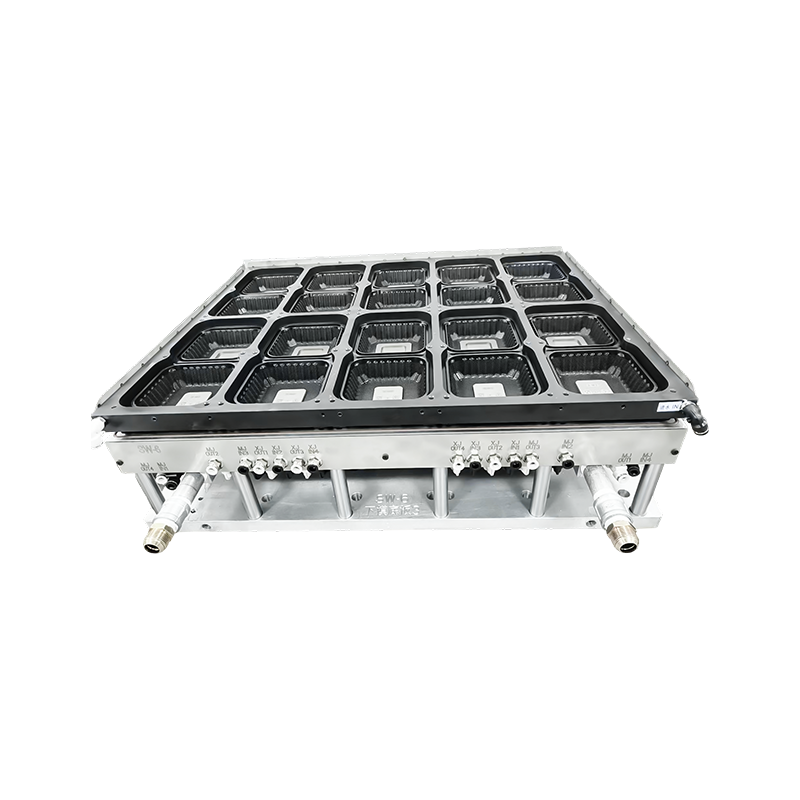
For milk tea cup lid tooling, the sealing surface is the most inspected feature on the part. A mold with a properly machined crush ring gives the forming line the best chance of passing leak tests from the first production hour.
 Milk Tea Cup Lid Thermoforming MoldProduct Description The milk tea cup lid thermoforming mold for milk tea lids is specially designed for producing various types of milk tea cup lids. It is suitable fo...View Product →
Lid molds usually carry 16 to 64 cavities, and every cavity must repeat the same flatness. This is where CNC finishing quality becomes visible in production data.
Cup Lids, Cups, and Lunch Boxes: Matching Mold Manufacturing to the Product
The correct mold layout depends on the disposable item being formed. The product families a mold maker offers reveal which packaging problems it has already solved in practical production. Cup lid tooling is dominated by cavity count and sealing flatness; cup tooling by wall distribution; lunch box tooling by hinge and closing geometry.
Beverage cup molds
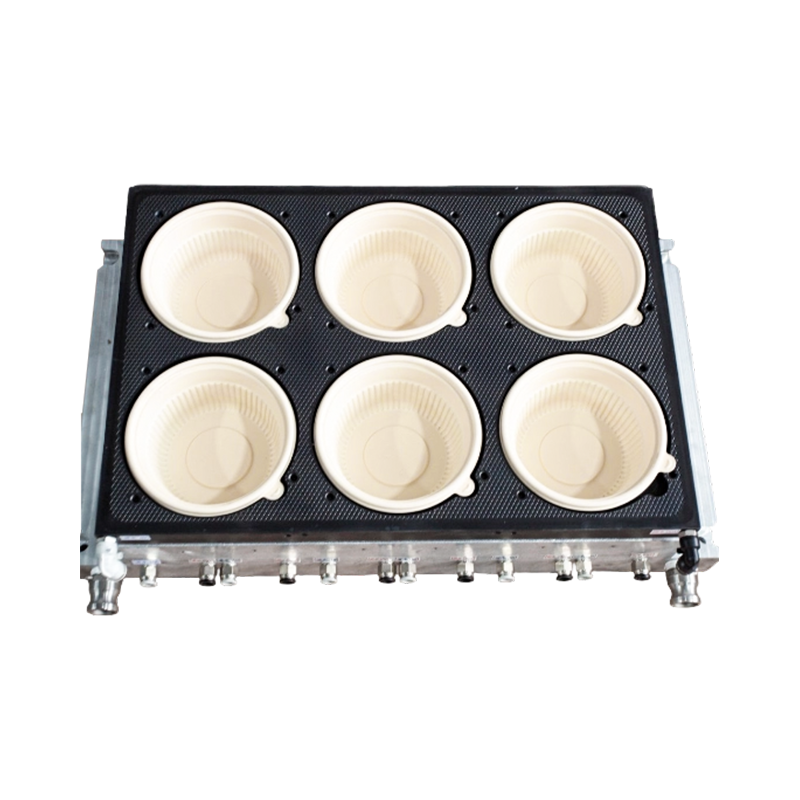
Cups draw deeper than lids, so wall distribution is the first priority. Draft angle, plug assist design, and cavity cooling all determine whether the wall thins near the bottom or holds a uniform thickness across the full draw.
 Milk Tea Cup Thermoforming MoldProduct Description The milk tea cup thermoforming mold is crafted from high-quality aluminum alloy and undergoes precision CNC machining and surface polishing, ensuri...View Product →
Lunch box molds
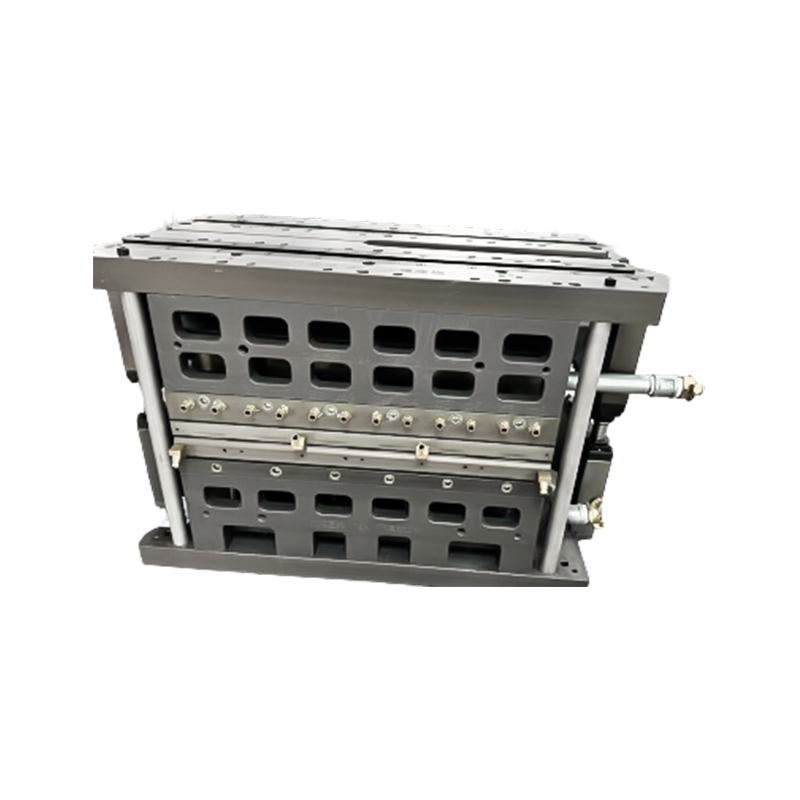
Clamshell boxes require a reliable living hinge, positive locking tabs, and a rim that seats without popping open. Round lidded boxes need consistent lid-to-body interference, while round lidless boxes must release from the mold without distortion.
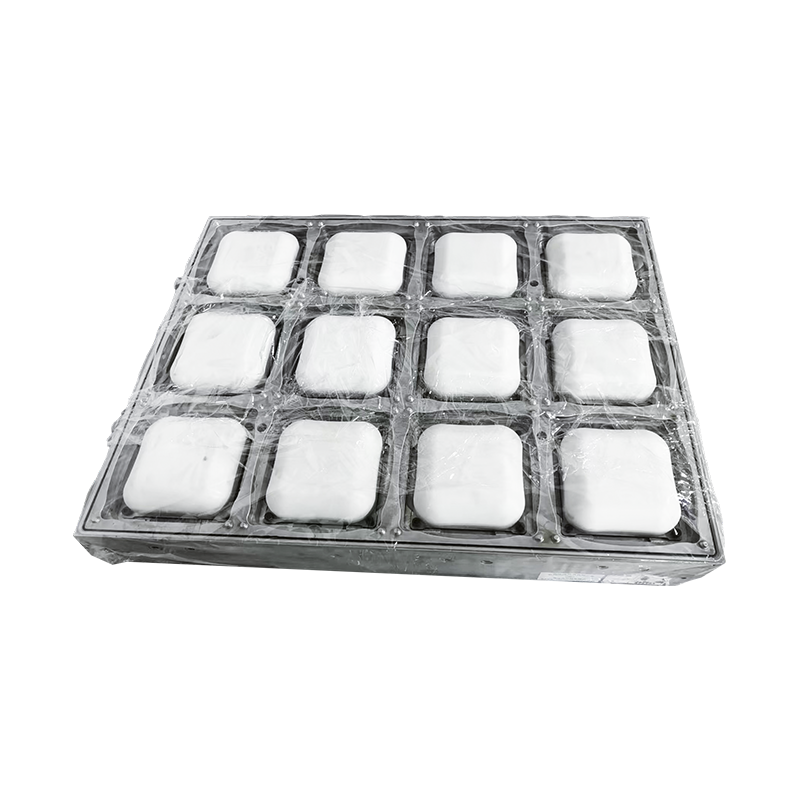 Rectangular Clamshell Packaging Box Thermoforming MoldProduct Description This rectangular clamshell packaging box thermoforming mold is a specialized mold for producing rectangular, one-piece, lidded takeaway boxes. It's...View Product →
The complete lineup, including round lidded and round lidless lunch box molds, is listed in our disposable packaging mold product range if you want to compare options before a detailed discussion.
What Buyers Should Verify Before Placing a Mold Order
Because the mold decides packaging quality, a purchase order should read like a technical specification rather than a simple price confirmation.
- Cavity count and forming machine compatibility, including forming area and sheet index.
- Mold material grade and expected tool life under the target material.
- Dimensional tolerances and the shrinkage allowance assigned to the sheet.
- Sample approval criteria, including dimension report, leak test, and drop test.
- Delivery schedule, spare parts, and support during the first production run.
| What to verify | Typical question | Warning sign |
|---|---|---|
| Cavity layout | Does the layout match the former's sheet index? | No index drawing shared |
| Tolerance basis | What is the flatness target on the rim? | No tolerance defined |
| Sampling policy | Will first articles come with a dimension report? | Samples are optional |
Ask for first articles and a dimension report before accepting a mold. In our factory, every disposable packaging mold is sampled on an in-house former before delivery, so wall distribution, part weight, and dimensions are confirmed by data rather than by appearance.
Frequently Asked Questions
Q1: What is the typical lead time for a disposable packaging mold?
A 16-to-32-cavity cup lid mold usually takes 15 to 20 working days, including one round of sample adjustment. Larger lunch box molds may need 25 to 30 days depending on cavity count and hinge complexity.
Q2: How many cavities should a cup lid mold have?
It depends on the forming machine and order volume. Sixteen cavities suit medium production, while 32 to 64 cavities serve high-speed disposable packaging lines. Higher cavity counts lower per-part cost but require more careful cooling and alignment.
Q3: Which mold material is best for high-volume disposable packaging?
7075 aluminum is often chosen for hardness and wear resistance; 6061 aluminum is used when thermal response and cost matter more. Steel is reserved for exceptional volumes because its slower heat transfer extends cycle time.
Q4: Why do cup lids leak even when the mold is new?
The usual causes are sealing surface flatness, insufficient forming pressure, or inconsistent sheet thickness. A mold with a properly machined crush ring and verified rim flatness gives the forming line the strongest possible starting point.
Disposable packaging mold manufacturing succeeds when the mold maker understands the whole process: part design, sheet behavior, and the output target of the forming line. That is why Suzhou Huashang Mould combines in-house design, 18 CNC machines, two three-station forming machines, and a dedicated sampling former under one roof. The workshop is not the product. The product is a mold that starts producing saleable lids, cups, and boxes from the first production hour.
If your next project depends on a cup lid, beverage cup, or lunch box mold, start the conversation with the tolerance that matters most on your line. A precise question about flatness, cavity count, or shrinkage is the fastest way to identify whether a mold manufacturer can actually meet your production requirements.