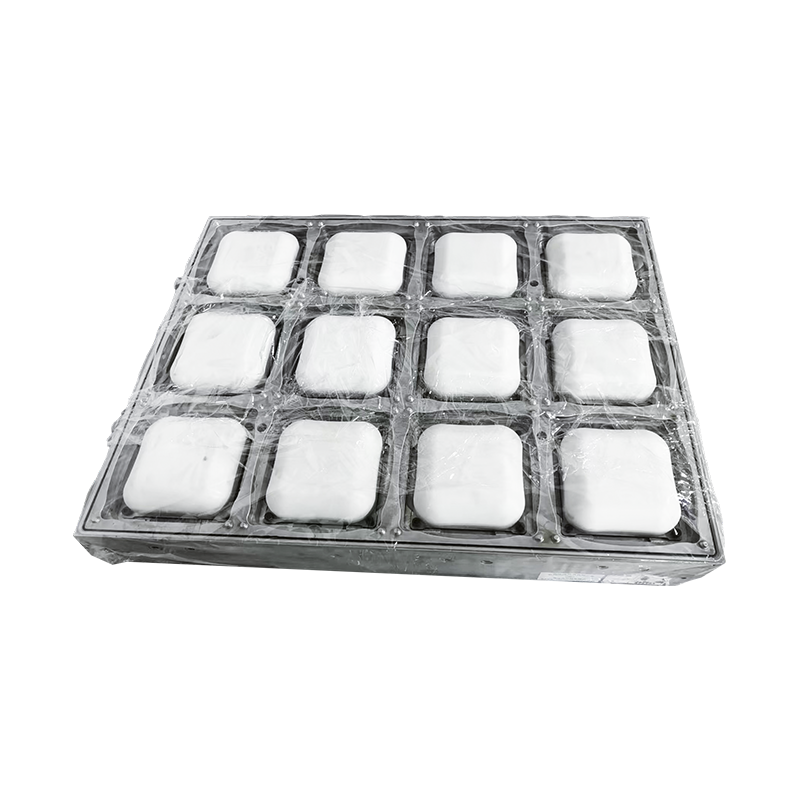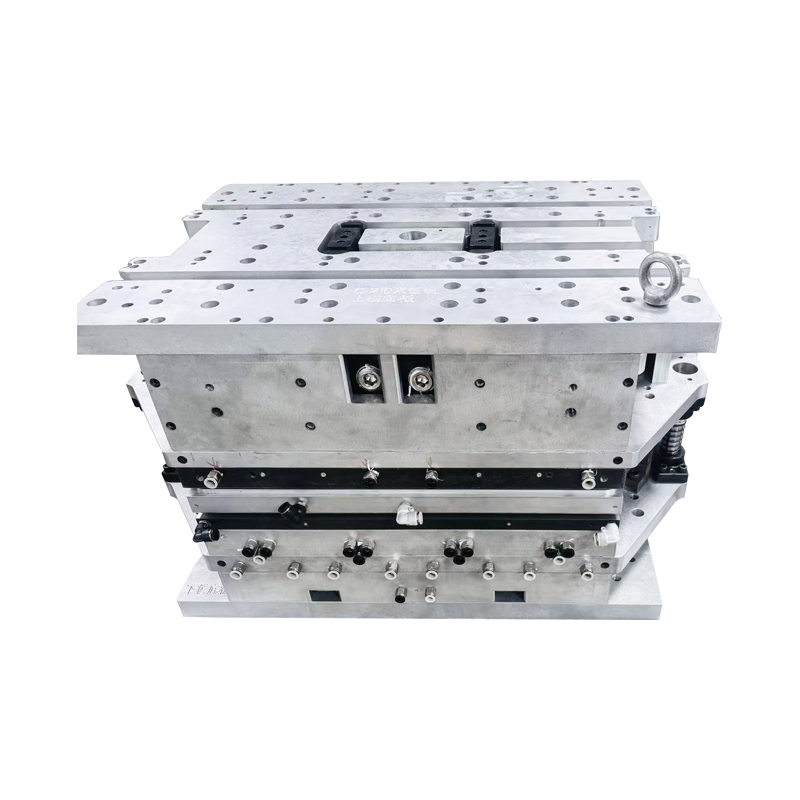


 en
en  English
 Español
 عربى
عربى
Why High-Speed Packaging Programs Now Depend on Rapid Tooling
Packaging converters that run round lidded boxes, lidless trays, and cup lids on tight seasonal calendars rarely have the luxury of a twelve-week tooling lead time. A new snack tray design, a resized lid diameter, or a last-minute material change can arrive with only a few weeks before a production slot opens. This is the gap that rapid tooling was built to close: a set of machining, design, and validation practices that compress the path from concept to a working thermoforming mold without sacrificing the dimensional control that packaging lines require.
Unlike heavy industrial tooling built for millions of cycles, thermoforming molds for thin-gauge packaging often need to be revised, resized, or replaced within a single product life cycle. Rapid tooling treats that reality as a design input rather than an exception, favoring machinable aluminum blocks, streamlined CNC programs, and shortened trial cycles that get a validated mold onto the forming station faster.
What Rapid Tooling Means in a Thermoforming Context
In sheet and roll-fed thermoforming, rapid tooling is not a single technique but a combination of choices made across design, material, and manufacturing stages. The goal is a shorter interval between a finalized part drawing and a mold that can run production-representative parts.
Core characteristics of a rapid tooling program
- Aluminum or aluminum-alloy tooling blocks instead of hardened tool steel for most cavity and plug components
- Simplified cooling channel layouts that can be machined directly rather than deep-drilled and plugged
- Standardized mold base plates and clamping interfaces that are reused across projects
- Design-for-manufacturing review performed before programming, not after the first trial
- Shortened first-article trial cycles with in-process measurement instead of full offline inspection
None of these practices are exotic. What distinguishes a rapid tooling workflow is discipline in sequencing them so that machining, fitting, and trial forming overlap wherever the process allows, rather than running as strictly separate stages.
Aluminum Thermoforming Molds: The Foundation of Fast Turnaround
Aluminum tooling is the material choice that makes most rapid tooling schedules possible. Compared with P20 or H13 tool steel, aluminum alloys commonly used for thermoforming tooling remove material two to three times faster under equivalent CNC parameters, which shortens both roughing and finishing passes.
Why aluminum works for thin-gauge forming tools
- High thermal conductivity helps the sheet cool and set faster inside the cavity, supporting shorter cycle times on the forming machine
- Lower cutting forces reduce spindle load, allowing higher feed rates during roughing
- Good dimensional stability at the moderate mold temperatures typical of thermoforming, generally well under the ranges used in injection molding
- Straightforward polishing and texturing for cosmetic surfaces on lids and closures
The tradeoff is wear resistance. Aluminum tooling used for prototype and bridge production commonly sustains a working life in the range of several thousand to a few tens of thousands of forming cycles before cavity detail begins to degrade, depending on sheet material abrasiveness, wall thickness, and how aggressively the mold is trimmed in-station. For packaging programs that need thirty to eighty thousand pieces to validate a new lid or box before committing to a long production run, that service life is generally sufficient. Programs expecting continuous multi-year volume typically transition to a hardened steel production mold once the design is frozen, using the aluminum tool as the bridge that proved the geometry.
CNC Mold Milling: Precision Without the Wait
CNC mold milling is where the time savings of rapid tooling actually get realized on the shop floor. High-speed machining centers running smaller-diameter cutters at elevated spindle speeds can hold cavity contours, vent hole placement, and draft angles to the tolerances a thermoforming mold needs, while removing far more material per hour than conventional milling.
Typical rapid tooling machining sequence
| Stage | Focus | Typical duration |
|---|---|---|
| Roughing | Bulk material removal to near-net cavity shape | Same day to two days |
| Semi-finishing | Contour refinement, radius blending | One day |
| Finishing | Final surface, vent pattern, texture zones | One to two days |
| Bench fitting | Deburring, insert fitting, plate alignment | Half to one day |
| Trial forming | First-article sheets, dimensional check | One day |
Programmed correctly, roughing and semi-finishing on a mid-size lid or tray cavity can be compressed into a two to three day machining window, with the full tool ready for a trial run inside a single work week. This is the practical meaning of fast turnaround mold manufacturing: not a single fast machine, but a machining plan and a material choice that together remove the usual multi-week wait between design freeze and first trial part.
Where vent design still matters
Vent hole size and spacing directly affect how cleanly a sheet forms into fine detail such as a lid rim or a snap bead. Rapid tooling projects sometimes under-invest in vent layout to save programming time, which shows up later as webbing or slow evacuation during trial forming. A short design-for-manufacturing pass focused specifically on venting before programming begins is one of the highest-value steps in the entire schedule, because it prevents rework that would otherwise erase the time saved elsewhere.
From Prototype Tooling to Production-Grade Molds: A Four-Stage Workflow
Prototype tooling and production-grade tooling are not two different technologies; they are two points on the same rapid tooling pathway, distinguished mainly by expected cycle count and finish requirements. The diagram below outlines how a project typically moves between them.
The key overlap point is between milling and trial forming. Instead of waiting for a full inspection report before scheduling a trial, well-run rapid tooling shops book the trial forming slot as soon as bench fitting is confirmed, then use the trial itself as the final dimensional check on functional details like snap fit and stack height.
Applying Rapid Tooling Across Common Packaging Mold Types
Three mold families illustrate how rapid tooling principles apply differently depending on part geometry and end use.
Round lidded packaging boxes
A round lidded packaging box thermoforming mold typically pairs a base cavity with a matching lid tool, so both halves need to be machined to consistent rim tolerances for the lid to seat correctly. Rapid tooling programs for this format usually machine base and lid cavities as a matched set from the same material batch to reduce fit-up variation during trial forming.
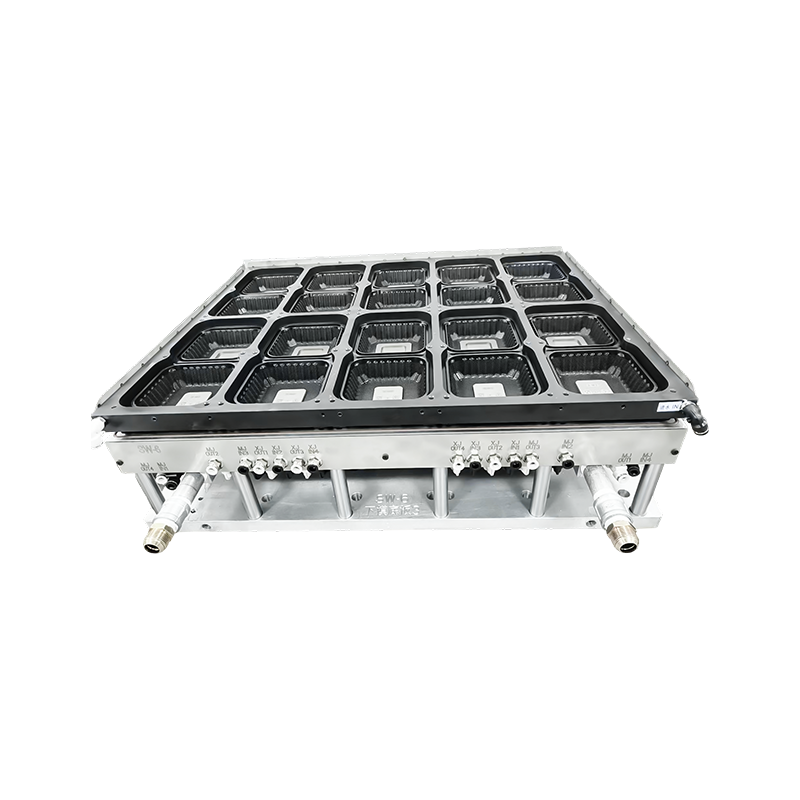
Round lidless packaging boxes
A round lidless packaging box thermoforming mold removes the lid-fit variable, so tooling effort concentrates on wall thickness distribution and base flatness for stacking. Because there is no mating lid tolerance to chase, these molds are often among the fastest to move from milling straight into trial forming.
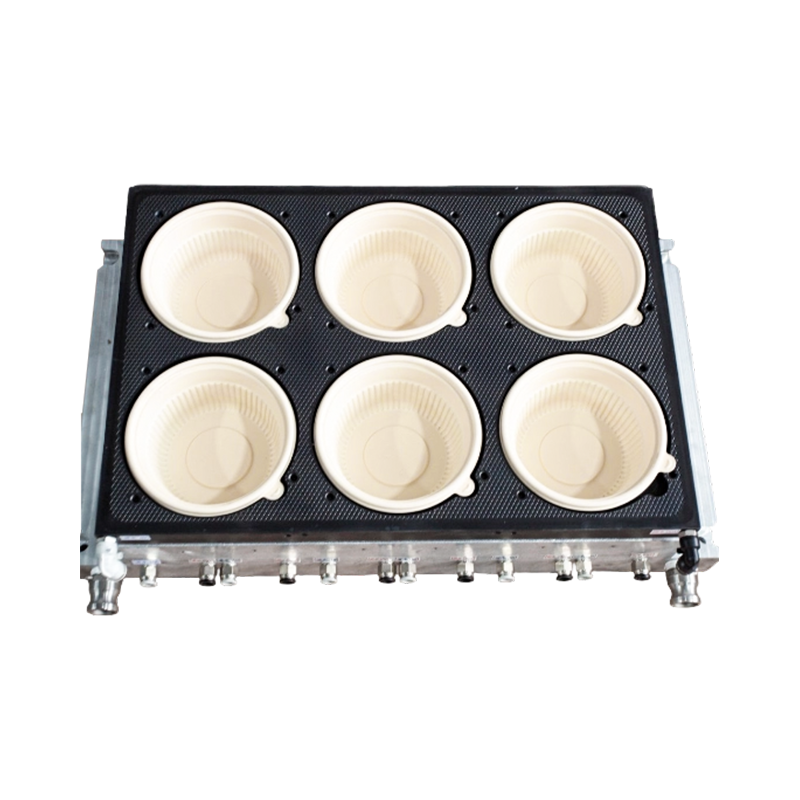
Milk tea cup lids
A milk tea cup lid thermoforming mold has the tightest tolerance requirements of the three, since the lid must seal reliably against a cup rim and often includes a scored straw entry point. Rapid tooling for cup lids usually reserves extra bench-fitting time for the score-line detail, since this feature is the most sensitive to cutter wear during finishing passes.
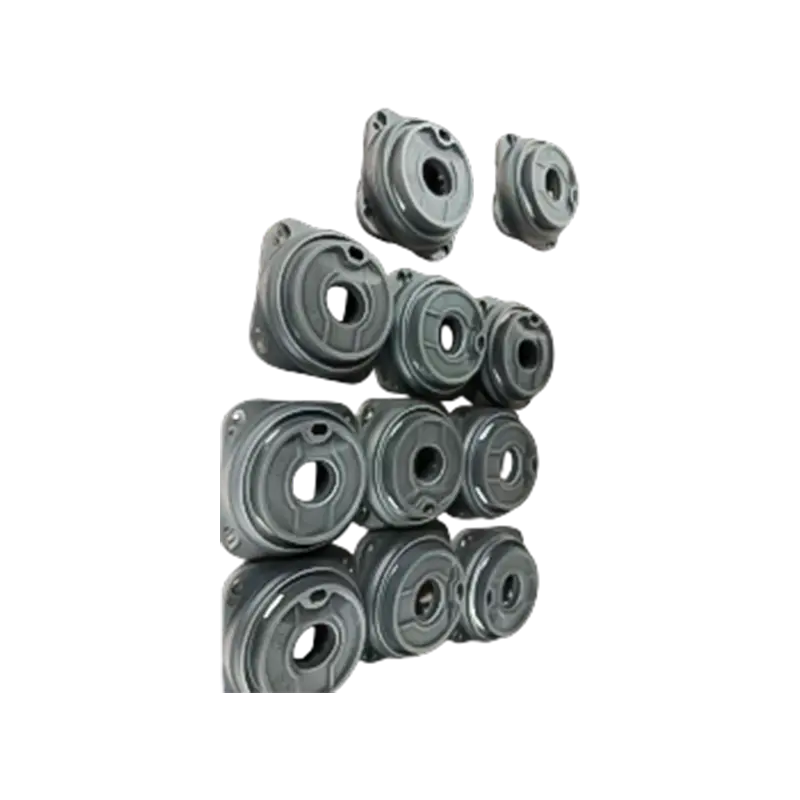
| Mold type | Primary tooling focus | Typical trial cycle count |
|---|---|---|
| Round lidded box | Lid-to-base rim matching | 200 to 500 parts |
| Round lidless box | Wall thickness and base flatness | 150 to 400 parts |
| Milk tea cup lid | Seal fit and score-line detail | 300 to 600 parts |
Rapid Tooling Versus Conventional Tooling: A Side-by-Side Comparison
The decision between a rapid tooling approach and a conventional hardened tooling program usually comes down to expected volume, timeline pressure, and how settled the part design is.
| Factor | Rapid tooling | Conventional tooling |
|---|---|---|
| Typical material | Aluminum alloy | Hardened tool steel |
| Lead time to first trial | One to two weeks | Four to eight weeks |
| Expected cycle life | Several thousand to tens of thousands | Hundreds of thousands or more |
| Best fit for | New designs, seasonal runs, bridge production | Stable, high-volume long-term production |
| Design change tolerance | Easier to modify or remachine | Costly and slow to revise |
Many packaging programs use both, in sequence. An aluminum rapid tooling set validates the geometry and proves out forming parameters, and once the design is locked, a production-grade steel mold is cut using the same cavity data, with wear-critical zones upgraded to hardened inserts.
Maintaining Dimensional Accuracy and Cycle Life in Fast-Turnaround Tools
Speed and accuracy are not automatically in conflict, but a rapid tooling program has to manage a few known risk points deliberately rather than assume they will resolve themselves during trial forming.
Common risk points and how they are addressed
- Cutter deflection on deep cavities: managed by staging finishing passes at reduced stepover rather than a single aggressive pass
- Thermal drift during long milling runs: managed by allowing the block to normalize to shop temperature before final finishing cuts
- Vent hole burr: managed with a dedicated deburring pass instead of relying on trial forming to reveal blockages
- Fixture repeatability: managed by using standardized mold base plates so the tool locates the same way on every trial
Tracked cycle life is also a practical quality metric. Recording the shot count at which a lid rim or cup lid seal begins to show measurable dimensional drift lets a converter plan the transition to a production-grade mold before quality issues appear on the line, rather than reacting after parts fail inspection.
What Drives Cost and Lead Time in Rapid Tooling Projects
Cost estimates for rapid tooling vary widely because several independent factors compound, rather than because pricing is unpredictable. The main drivers are consistent across mold types.
| Driver | Effect on cost and time |
|---|---|
| Part footprint and cavity count | Larger or multi-cavity tools extend both machining and fitting time |
| Draft angle and undercut complexity | Aggressive undercuts add specialized machining or inserts |
| Cosmetic surface requirements | Polished or textured zones add finishing time |
| Vent and cooling density | Finer venting improves part quality but adds programming time |
| Material batch availability | Pre-stocked standard block sizes shorten scheduling versus custom-cut blanks |
Converters that plan for rapid tooling from the concept stage, rather than requesting it as a rescue measure after a schedule slips, generally get the most benefit. Standardizing mold base sizes across a product line, for example, means a new lid or box design can reuse an existing base plate and clamping setup, removing one of the longer lead-time items from the schedule before machining even starts.
Frequently Asked Questions
Q1: How is rapid tooling different from prototype tooling?
Prototype tooling is a subset of rapid tooling focused purely on validating part geometry with the smallest possible number of trial parts. Rapid tooling is the broader set of practices, including material choice, machining sequencing, and fixture standardization, that can also be applied to short-run production tools, not only one-off prototypes.
Q2: Can an aluminum rapid tooling mold be used for full production runs?
It can, within its expected cycle life. Many packaging programs run aluminum tooling through an entire bridge production phase, covering tens of thousands of parts, before switching to hardened steel tooling once volume justifies the additional tool cost.
Q3: How long does CNC mold milling typically take for a packaging lid or box cavity?
For a mid-size cavity with moderate detail, roughing through finishing on a rapid tooling program commonly fits within a two to four day machining window, followed by bench fitting and a trial run inside the same work week.
Q4: What is the biggest risk in compressing a tooling schedule?
Skipping or rushing the design-for-manufacturing review, particularly around vent placement and draft angles, is the most common source of rework. A short review before programming begins usually prevents the schedule loss it is meant to avoid.
Q5: Do round lidded and round lidless box molds require different rapid tooling approaches?
The core machining process is similar, but lidded designs require matched-set tolerancing between the base and lid cavities, while lidless designs concentrate tooling effort on wall thickness and base flatness alone, which is one reason lidless tools often reach trial forming faster.