

 en
en  English
 Español
 عربى
عربى
Selecting Food-Grade Resins Before Any Forming Begins
Every disposable cup, lid, or bowl starts as small, uniform pellets long before it takes shape on a production line. Understanding milk tea cup thermoforming mold output quality means starting with the resin itself, since sheet consistency, clarity, and wall strength are all determined at the pellet stage. Manufacturers typically choose from three resin families for cup and lid production, each selected for a different balance of rigidity, clarity, and cost.
- Polypropylene pellets, valued for heat resistance and flexibility in hot-fill applications
- Polystyrene pellets, often referred to in the industry as styrene plastic, prized for rigidity and a smooth printable surface
- PET pellets, chosen for optical clarity in cold-drink cups and clamshell packaging
Before extrusion, pellets are dried in dehumidifying hoppers to remove residual moisture. Even small amounts of trapped moisture can create bubbles or streaking in the finished sheet, so drying times of two to four hours at controlled temperatures are standard practice across food-grade packaging plants.
| Resin Type | Typical Use | Key Property |
|---|---|---|
| Polypropylene (PP) | Hot beverage cups, microwave-safe bowls | High heat tolerance |
| Polystyrene (PS) | Rigid lids, cutlery, foam trays | Dimensional stability |
| PET | Cold drink cups, clear lids | Optical clarity |
How Is the Plastic Made Into Sheet? The Extrusion Stage
The question of how is the plastic made often starts here, at the extruder, where pellets are transformed into continuous rolled sheet. This step is the foundation for every downstream process, since a poorly extruded sheet cannot be corrected later in the forming stage.
The Core Extrusion Sequence
- Pellets are fed from a hopper into a heated barrel
- A rotating screw melts and compresses the resin into a uniform flow
- Molten resin passes through a flat-slot die to form a continuous sheet
- Chilled rollers, known as a calendar or cooling stack, set the sheet thickness and surface finish
- The sheet is trimmed at the edges and wound into large rolls
Sheet thickness for cup and lid stock generally ranges from 0.2 millimeters for thin lids up to 1.5 millimeters for insulated cup walls. Tighter thickness tolerance, typically within plus or minus five percent, directly affects how evenly the sheet will heat and stretch during forming.
How Do You Make a Plastic Cup From Rolled Sheet?
Once sheet is wound and cooled, it moves to the thermoforming line, where the question of how do you make a plastic container into a finished shape gets answered. Thermoforming reheats the flat sheet just enough to make it pliable, then draws it over or into a mold cavity using vacuum, pressure, or a mechanical plug.
The Thermoforming Cycle in Practice
A typical cycle for cup or lid production runs in the range of one to three seconds per shot on high-speed roll-fed lines, though heavier-gauge products such as insulated hot cups may run slower to allow full material distribution. The general sequence is consistent across most equipment types.
- Sheet indexes forward into the heating station, where infrared elements bring the surface to forming temperature
- The heated section moves into the mold station
- Vacuum draws the softened sheet against the mold cavity, while a plug assist pushes material into deeper sections
- Cooling channels in the mold rapidly set the shape before ejection
- Formed parts are punched or die-cut from the sheet skeleton
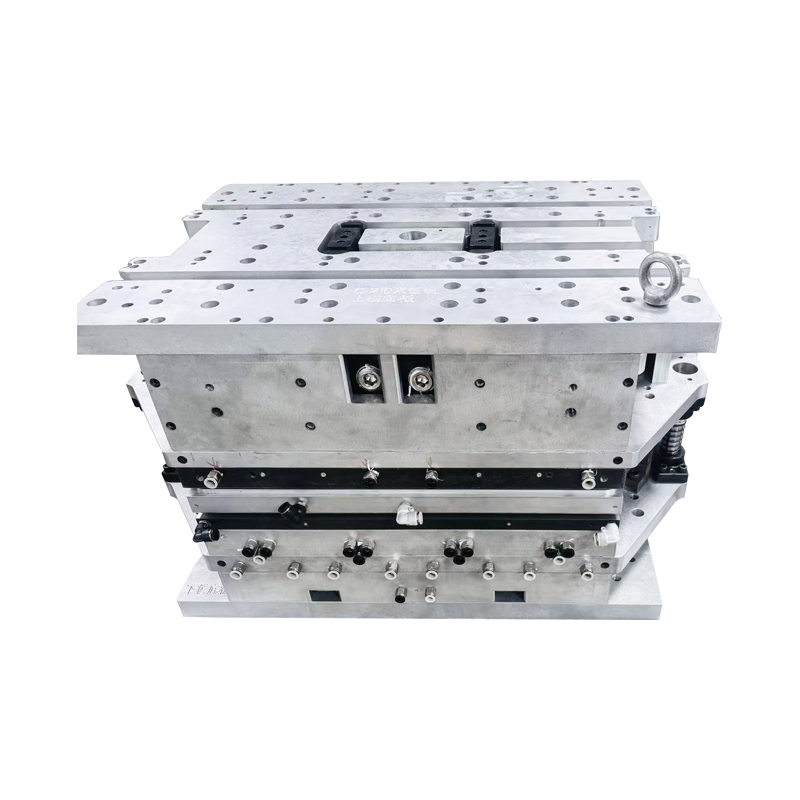
Mold design has a direct effect on wall thickness distribution. A cavity built for a tall, straight-walled milk tea cup needs different plug-assist timing than a shallow, wide-rimmed lid, which is why cup molds and lid molds are engineered as separate tooling families even when they share a production line.
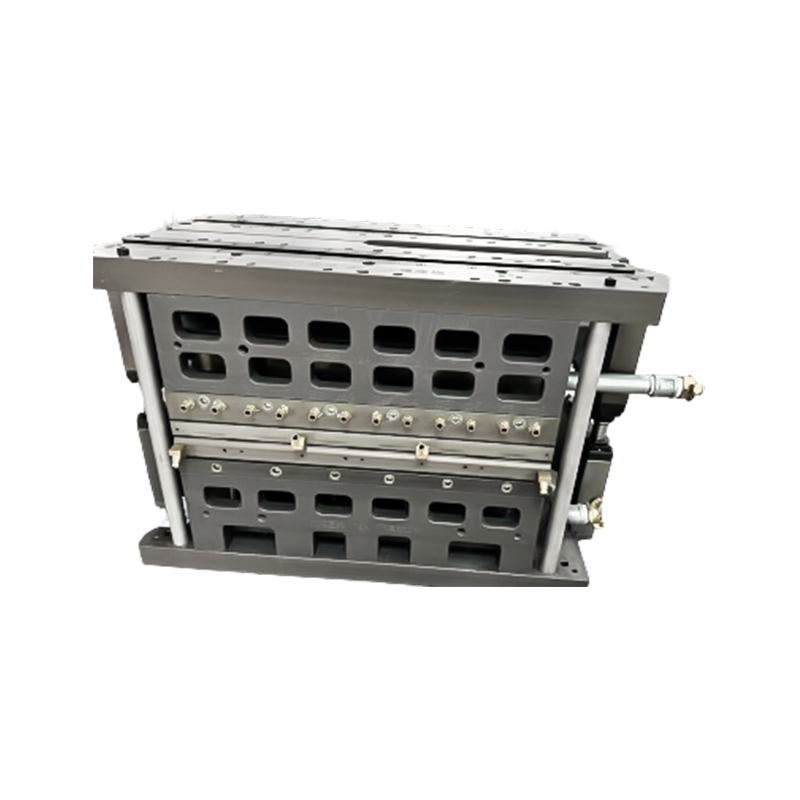
Styrene Plastic and Its Place in Rigid Lid Production
Styrene plastic remains one of the most common materials for flat and domed lids because it holds a crisp edge and resists warping at room temperature. Unlike polypropylene, which stays slightly flexible, polystyrene forms a rigid snap-fit rim that helps lids seal securely onto cup lips.
Rigid lids depend on consistent edge geometry. A variance of even a few hundredths of a millimeter around the sealing lip can mean the difference between a secure snap and a lid that leaks under light pressure.
Because polystyrene sheet is relatively brittle compared to polypropylene, forming temperatures and cooling rates are tuned more precisely. Overheating the sheet risks stress cracking around vent holes or straw slots, so lid-focused lines often run slightly lower forming temperatures paired with slower cooling cycles than cup lines.
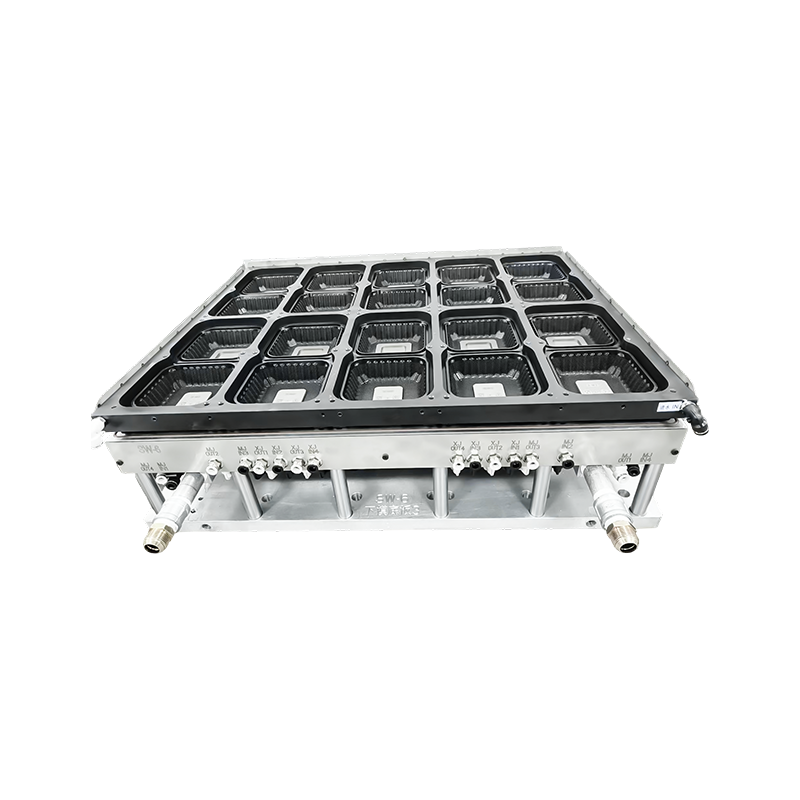
A coke cup lid thermoforming mold is a practical example of tooling built specifically around these rigidity requirements, with vent geometry and sealing ridges cut to tight tolerance so the lid performs consistently across a full production run.

Inside a Disposable Cup Production Line
A modern disposable cup production line is rarely a single machine. It is a coordinated sequence where sheet handling, forming, trimming, and stacking all run in step with each other, often at speeds exceeding sixty cycles per minute for lightweight lid products.
| Station | Function | Typical Concern |
|---|---|---|
| Unwind and Feed | Pulls sheet from roll into the line | Tension control to avoid stretching |
| Heating Oven | Brings sheet to forming temperature | Even heat across the full width |
| Forming Station | Vacuum and plug-assist shaping | Wall thickness distribution |
| Trim Press | Separates parts from sheet skeleton | Clean edges without flash |
| Stacker | Nests and counts finished parts | Consistent stack height for packing |
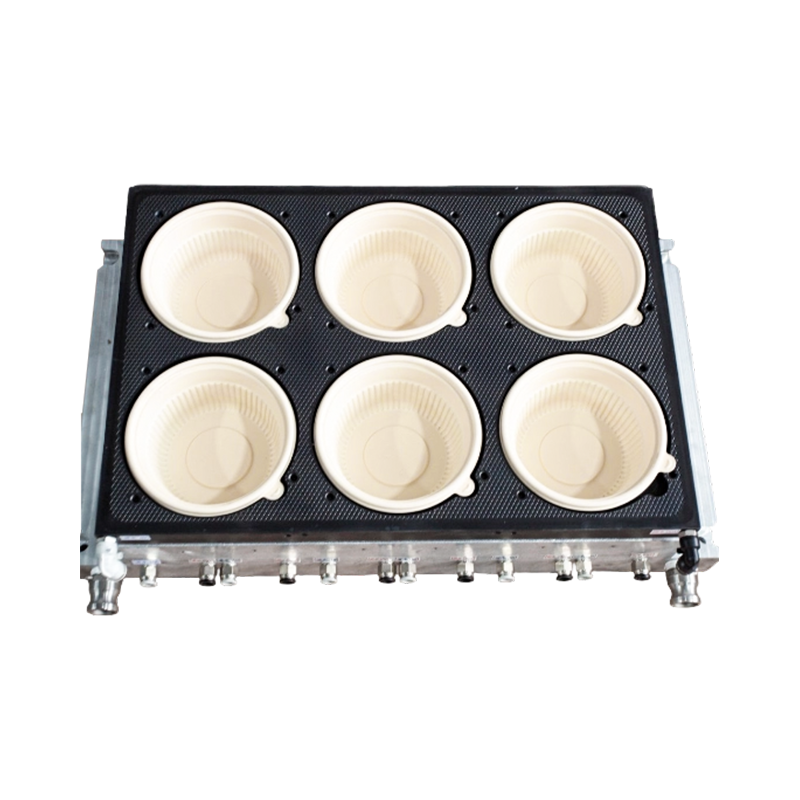
Bowl lids present their own handling challenge because the flange diameter is often wider relative to cup height, which changes how the sheet stretches during the vacuum draw. A paper bowl lid thermoforming mold is typically built with a shallower draw depth and a broader plug-assist surface to keep material distribution even across the wider flange area.

Quality Control and Food-Grade Manufacturing Standards
Food-contact packaging carries stricter oversight than general plastic goods, and that oversight starts before the first pellet is melted and continues through final packing.
- Raw resin batches are checked against food-contact material certificates before entering production
- Sheet thickness is monitored continuously using in-line gauging sensors
- Formed parts are sampled for wall thickness consistency at multiple points around the cup or lid
- Finished products undergo leak and seal testing where applicable, particularly for lids paired with liquid-filled cups
- Packaging areas maintain controlled cleanliness to prevent contamination before goods reach food service use
Traceability has become a standard expectation as well. Many production facilities log resin lot numbers against finished product batches, so any material issue can be traced back to a specific extrusion run rather than triggering a blanket recall.
Comparing Thermoforming Approaches for Different Packaging Types
Not every cup, lid, or bowl component is formed the same way. The table below outlines how forming priorities shift depending on the product category.
| Product Type | Draw Depth | Primary Forming Priority |
|---|---|---|
| Tall Beverage Cup | Deep | Even wall thickness top to bottom |
| Flat or Domed Lid | Shallow | Sharp, consistent sealing edge |
| Wide Bowl Lid | Shallow, wide flange | Uniform stretch across a broad surface |
These differences explain why tooling is rarely interchangeable between categories. A mold built for deep cup draws will not distribute material correctly on a shallow, wide-flange lid, and forcing the wrong tooling into the wrong application typically shows up as thin spots, warping, or inconsistent seals.
Frequently Asked Questions
Q1: How is the plastic made before it reaches a thermoforming machine?
Resin pellets are melted in an extruder, pushed through a flat die to form continuous sheet, then cooled on rollers and wound into rolls that feed the forming line.
Q2: How do you make a plastic cup hold its shape after forming?
Cooling channels built into the mold rapidly set the sheet once it has been drawn into the cavity, locking the shape in place before the part is trimmed and ejected.
Q3: What makes styrene plastic a common choice for lids rather than cups?
Polystyrene holds a rigid, precise edge that suits sealing lips and snap-fit rims, while its lower flexibility makes it less suited to deep-draw cup walls that need some give.
Q4: Why does wall thickness vary across a single formed cup?
Sheet stretches unevenly during the vacuum draw, with corners and deep sections typically thinning more than flat areas, which is why plug-assist tooling is used to help redistribute material.
Q5: How often is sheet thickness checked during production?
Most lines use continuous in-line gauging sensors rather than periodic spot checks, allowing operators to catch thickness drift in real time before large volumes of off-spec sheet are produced.