

 en
en  English
 Español
 عربى
عربى
Match Your Process to Part Complexity, Volume, and Material
Choosing the best thermoforming process comes down to three core factors: part geometry, production volume, and material thickness. Vacuum forming works well for shallow, simple shapes at low-to-medium volumes. Pressure forming delivers sharper detail for mid-volume runs. Twin-sheet forming is best when you need hollow or double-walled parts. Start by defining those three variables, and the right process becomes clear.
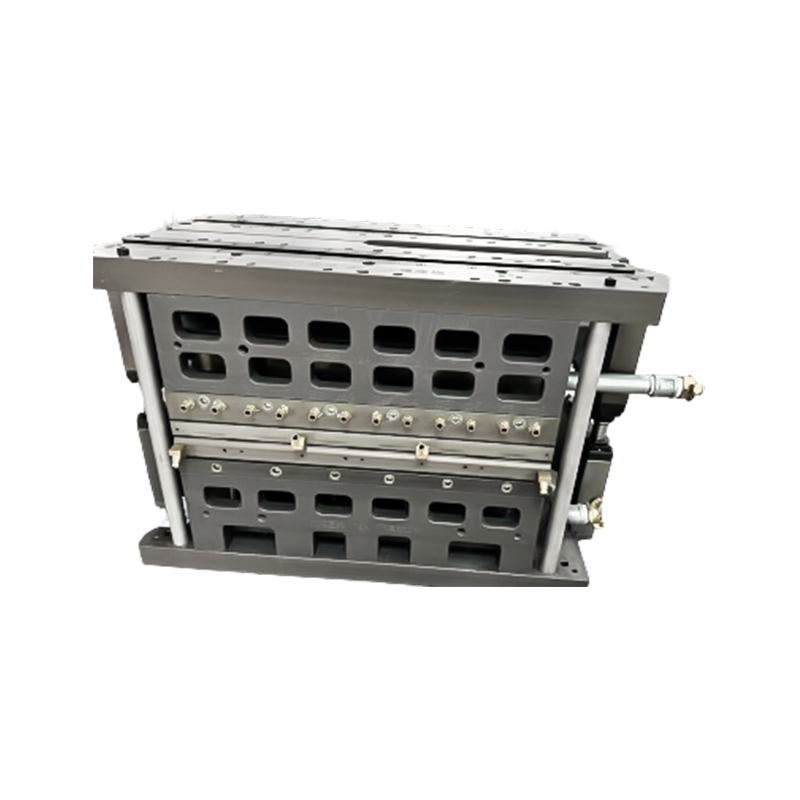
The quality of your outcome also depends heavily on your thermoforming molds — the wrong mold material or design will undermine even the best process selection.
Understanding the Main Thermoforming Processes
There are four primary thermoforming methods used in industrial and commercial production. Each has distinct advantages and trade-offs:
| Process | Pressure Range | Detail Level | Typical Volume | Cost |
|---|---|---|---|---|
| Vacuum Forming | Up to 14.7 psi (1 atm) | Low–Medium | Low–Medium | Low |
| Pressure Forming | Up to 150 psi | High | Medium–High | Medium |
| Twin-Sheet Forming | Variable | Medium | Medium | Medium–High |
| Drape Forming | Gravity-assisted | Low | Low | Very Low |
Vacuum Forming
Vacuum forming uses atmospheric pressure — roughly 14.7 psi — to pull a heated plastic sheet over a mold. It is the most widely used thermoforming method due to its low tooling cost and fast cycle times. It suits parts like trays, covers, and packaging inserts. However, it struggles with deep undercuts and fine surface textures.
Pressure Forming
Pressure forming adds compressed air (typically 50–150 psi) on the opposite side of the sheet from the vacuum, pressing the material more tightly into the mold. This produces sharper edges, deeper ribs, and cleaner surface textures. It is commonly used for medical equipment housings, panels, and consumer product enclosures where appearance matters.
Twin-Sheet Forming
Two separate plastic sheets are heated and formed simultaneously, then bonded together while still hot. This creates hollow, double-walled structures — ideal for pallets, doors, automotive interior panels, and coolers. Wall thickness consistency and bond strength are critical considerations.
Drape Forming
The simplest method: a heated sheet is draped over a mold using gravity. It is used for very large, shallow parts where tooling cost must be minimized. Accuracy and repeatability are limited compared to other methods.
Key Factors That Determine the Best Process for Your Part
1. Part Depth and Geometry
The draw ratio — the relationship between the depth of a part and its width — is a defining constraint. A draw ratio above 1:1 (depth equals width) significantly increases material thinning risk. Vacuum forming handles ratios up to about 0.5:1 comfortably. Pressure forming can manage higher draw ratios due to greater forming force. For complex geometries with sharp corners or fine surface detail, pressure forming is almost always the better choice.
2. Production Volume
Tooling cost must be amortized across your run size. For low volumes (under 500 units), a simple aluminum vacuum forming mold can be cost-effective. For runs exceeding 10,000 units, a hardened steel pressure forming tool pays for itself through longer mold life and faster cycle times. Twin-sheet tooling involves two matched mold sets, which raises upfront cost but enables unique structural designs not achievable any other way.
3. Material Type and Thickness
Different plastics behave differently under heat and pressure. Common thermoforming materials include:
- ABS — excellent for pressure forming; holds sharp detail well
- HDPE — used often in twin-sheet forming for structural parts
- PETG — great clarity, suitable for vacuum forming packaging
- Polycarbonate — high-impact, requires precise temperature control
- HIPS — cost-effective for disposable trays and packaging
Thicker gauges (above 3mm / 0.125 inches) generally require heavy-gauge thermoforming equipment with longer heat soak cycles. Thin-gauge materials (below 1.5mm) cycle faster and are better suited to high-speed roll-fed production lines.
4. Surface Finish and Appearance Requirements
If the final part will be visible — in a retail product, a medical device, or a vehicle interior — surface texture quality is non-negotiable. Pressure forming can replicate textures as fine as Class A automotive finishes, something vacuum forming cannot reliably achieve. The mold surface directly transfers to the part, which is why mold surface preparation and material selection are critical upstream decisions.
5. Tolerance and Dimensional Accuracy
Thermoforming generally holds tolerances of ±0.5mm to ±1mm for most features, though tighter tolerances are achievable with pressure forming and rigid tooling. If your part requires tight fits or mating surfaces, pressure forming with a metal tool is recommended over vacuum forming with an epoxy or wood mold.
How Mold Material Affects Your Process Choice
Mold selection is inseparable from process selection. Each process demands specific mold properties:
- Wood and MDF molds — suitable for prototypes and very low-volume vacuum forming; no pressure forming use
- Epoxy/composite molds — low cost, moderate life (100–500 cycles), good for vacuum forming sampling runs
- Cast aluminum molds — workable for medium volumes; handles vacuum and light pressure forming; good thermal conductivity for faster cycle times
- Machined aluminum molds — standard for production pressure forming; supports 10,000–50,000+ cycles; allows precise surface texturing
- Steel molds — used for the highest-volume or most demanding pressure forming applications; longest tool life; highest upfront cost
Mold temperature control also matters. Molds with internal water-cooling channels reduce cycle time by up to 30% and improve dimensional consistency — particularly important for pressure forming and twin-sheet forming.
Decision Framework: Choosing the Right Thermoforming Process
Use this step-by-step logic to narrow your choice:
- Define part geometry — Is it shallow and simple, or deep with fine detail? Shallow = vacuum forming. Detailed = pressure forming. Hollow = twin-sheet.
- Set volume expectations — Under 1,000 units? Use vacuum forming with a low-cost tool. Over 5,000 units with high detail? Invest in pressure forming tooling.
- Choose your material — Match the material's forming temperature and behavior to the process. ABS for pressure forming, PETG for vacuum-formed packaging, HDPE for twin-sheet structural parts.
- Determine surface requirements — Visible cosmetic surface? Choose pressure forming with a machined aluminum or steel mold. Functional non-visible part? Vacuum forming is sufficient.
- Evaluate cycle time needs — High-throughput production favors thin-gauge vacuum forming on roll-fed lines. Structural parts favor heavy-gauge processes with longer cycles.
Common Mistakes When Selecting a Thermoforming Process
Choosing vacuum forming by default is the most frequent error. Many engineers default to vacuum forming because it is cheaper upfront, only to find the surface quality or dimensional accuracy falls short — requiring expensive rework or retooling.
Underestimating draw ratio impact leads to thinning, webbing, or tearing during production. Always simulate or calculate wall thickness distribution before committing to a process.
Mismatching mold material to volume is another common pitfall. Using a wood or foam mold for a run of 2,000 parts will result in mold degradation, inconsistent parts, and unplanned downtime.
Skipping design for manufacturability (DFM) review before tooling results in features that are impossible or unreliable to form — such as zero-draft walls, sharp internal corners under 0.5mm radius, or undercuts without side actions.
FAQ: Thermoforming Process Selection
Q1: What is the most cost-effective thermoforming process for prototypes?
Vacuum forming with a low-cost epoxy or wood mold is typically the most affordable option for prototypes and sample runs under 100 units.
Q2: Can pressure forming match injection molding quality?
For surface texture and cosmetic detail, pressure forming can closely approach injection molding quality — particularly for large, flat, or moderately contoured parts. However, it cannot replicate the tight tolerances or wall uniformity achievable with injection molding on complex geometries.
Q3: What draw ratio is safe for vacuum forming?
A draw ratio of 0.5:1 (depth is half the width) is a common safe limit for vacuum forming. Higher ratios increase thinning risk and may require pre-stretching or plug assist.
Q4: How long does a typical aluminum thermoforming mold last?
A well-maintained machined aluminum mold typically lasts between 10,000 and 50,000 cycles depending on forming pressure, material abrasiveness, and cooling design.
Q5: Is twin-sheet forming suitable for food-contact applications?
Yes, if food-safe materials such as HDPE or PETG are used and the bonding process does not introduce contaminants. Always verify material certifications for food contact compliance.
Q6: How does mold temperature affect part quality?
Mold temperature directly affects cycle time, surface finish, and dimensional stability. Cooler molds speed up solidification but can cause surface defects. Water-cooled molds offer the best balance of speed and consistency.