

 en
en  English
 Español
 عربى
عربى
Introduction to High-Volume Disposable Container Production
The manufacturing landscape for thin-wall packaging has evolved into a highly specialized discipline where efficiency is measured in fractions of a second. At the heart of this industry lies the Disposable Food Container Mould, a complex piece of engineering designed to produce thousands of units per hour with surgical precision. When manufacturers evaluate the feasibility of a new production line, the primary question often centers on the maximum cavity count possible within a single mold base.
Determining the upper limit of cavity density is not merely a matter of physical space. It involves a delicate balance between mechanical stability, cooling efficiency, material rheology, and the clamping force of the injection molding machine. High-speed containers, typically used for takeout, dairy packaging, or fruit trays, require wall thicknesses often ranging from 0.4mm to 0.6mm. This thin-wall nature necessitates extreme injection pressures and rapid cooling cycles, both of which place immense stress on the mold components.
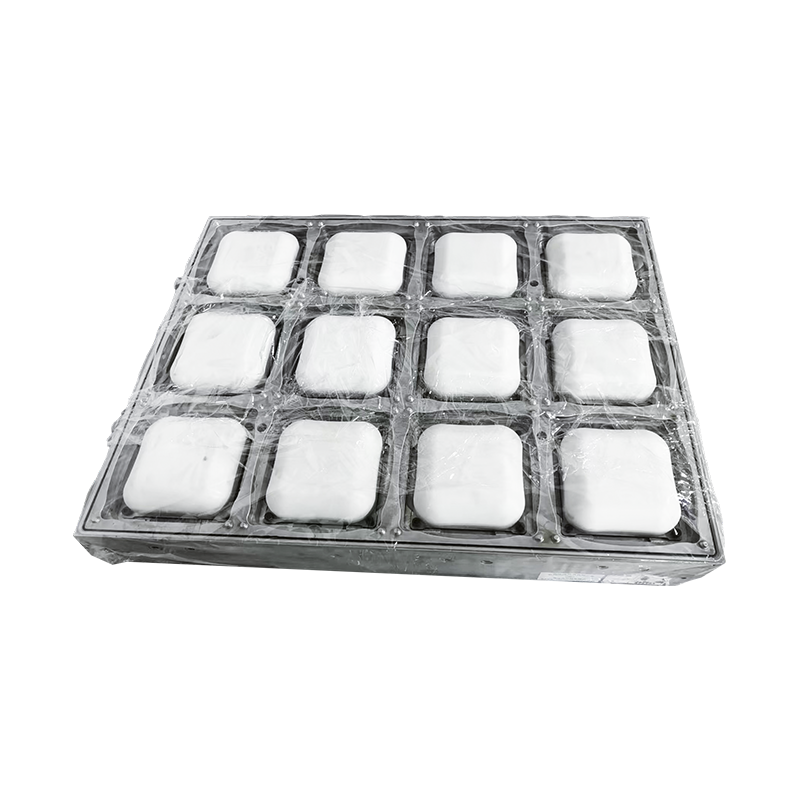
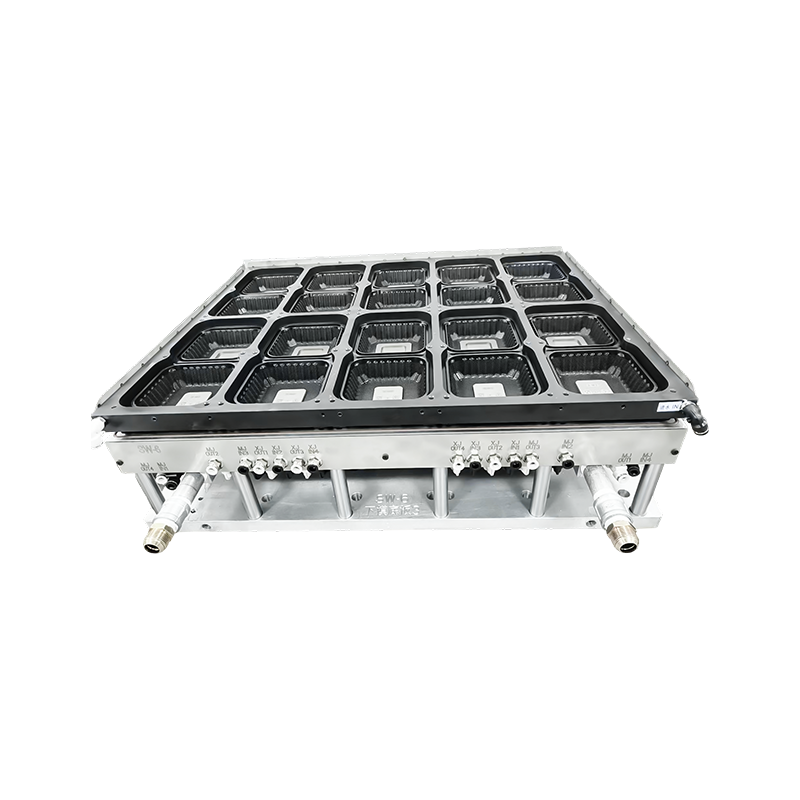
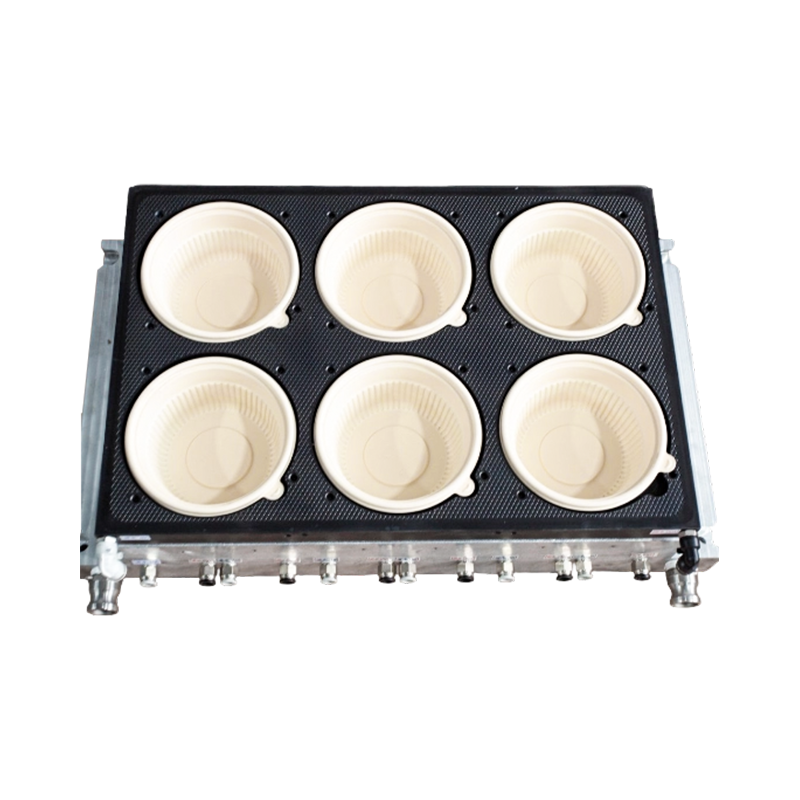
In contemporary industrial applications, we see cavity counts ranging from simple 2-cavity setups for large catering platters to massive 48 or 64-cavity configurations for smaller sauce cups or lids. However, for the standard 500ml to 1000ml rectangular or round containers, the industry "sweet spot" usually fluctuates based on the specific technology used—whether it be traditional injection molding or high-speed thermoforming. This article explores the technical ceiling of these counts and the variables that dictate how many "impressions" a single cycle can successfully produce.
The Interplay Between Machine Tonnage and Cavity Density
The most immediate constraint on cavity count is the injection molding machine's clamping force. Every additional cavity increases the total projected area of the molded parts. During the injection phase, molten plastic is forced into the cavities at high pressure; the machine must exert enough force to keep the mold halves closed against this internal pressure. If the cavity count exceeds the machine's capacity, "flashing" occurs, where plastic escapes the cavity, resulting in defective parts and potential mold damage.
For a high-speed Disposable Food Container Mould, the projected area is calculated by the top surface of the container multiplied by the number of cavities. Typically, high-speed machines dedicated to packaging range from 200 to 600 tons. A 4-cavity mold for a standard lunch box might require a 300-ton machine, while pushing to 8 or 12 cavities could necessitate a 500-ton machine or larger. The trend in the industry is toward higher cavitation to maximize the output per square foot of factory floor space, but this requires substantial capital investment in heavier machinery.
Platen Size and Tie-Bar Spacing
Beyond force, the physical dimensions of the machine platens limit how many cavities can be laid out. High-speed molds require thick plates to resist deflection under high pressure. When designing a high-cavity mold, engineers must ensure there is sufficient room for cooling channels between the cavities. If cavities are packed too tightly to increase the count, the cooling efficiency drops, leading to longer cycle times and neutralizing the benefit of the extra cavities.
Technical Thresholds for Different Container Types
The "maximum" count is highly dependent on the geometry and volume of the container. Smaller items allow for significantly higher cavitation than large, deep-draw containers. Below is a breakdown of typical industry maximums for high-speed production environments:
| Container Type | Standard Cavitation | High-Speed Maximum | Typical Machine Size |
| Small Sauce Cups (2oz) | 16 - 32 | 64 | 250 - 350 Tons |
| Round Soup Bowls (500ml) | 4 - 6 | 12 | 400 - 550 Tons |
| Rectangular Lunch Boxes (750ml) | 2 - 4 | 8 | 350 - 500 Tons |
| Multi-Compartment Trays | 2 | 4 | 450 - 600 Tons |
As shown, while 64 cavities are possible for tiny items, the maximum for standard meal containers typically caps at 8 or 12 cavities in a single-face mold. To go beyond this, manufacturers often pivot to "stack mold" technology, which effectively doubles the output without increasing the machine's tonnage requirements.
Stack Mold Technology: Breaking the Cavity Barrier
Stack molds are the pinnacle of high-volume disposable container production. Instead of placing all cavities on a single plane, a stack mold features two or more levels (or "decks") of cavities stacked back-to-back. When the machine opens, both levels open simultaneously, and parts are ejected from both faces.
This technology allows a manufacturer to run, for example, a 16-cavity production (8+8) on a machine that would normally only accommodate an 8-cavity single-face mold. Because the projected area of the two levels is superimposed, the clamping force required remains roughly the same as it would for a single level. However, the machine must have a sufficient opening stroke and be able to handle the increased weight of the mold assembly.
- Increased Productivity: Effectively doubling the output per cycle.
- Energy Efficiency: More parts are produced per kilowatt-hour of energy consumed by the machine.
- Complexity: Requires advanced hot runner systems to ensure balanced flow to all levels.
Cooling and Cycle Time Constraints
In high-speed molding, the cycle time is often the limiting factor for profitability. A mold with 12 cavities is useless if the cooling time is so long that a 4-cavity mold running twice as fast produces more parts per hour. For disposable containers, cycle times are often between 3 to 6 seconds. Achieving this requires specialized cooling layouts.
As the cavity count increases, the complexity of the cooling manifold grows exponentially. Each cavity must receive the same volume and temperature of coolant to ensure part consistency. High-speed molds typically use beryllium copper inserts in the core and cavity areas. This material has significantly higher thermal conductivity than steel, allowing heat to be stripped away from the plastic almost instantly. If the cavity count is pushed too high, the sheer density of cooling lines can weaken the mold's structural integrity, creating a "maximum" threshold based on safety and durability.
Hot Runner Systems in High-Cavity Molds
A high-cavity mold is only as good as its delivery system. For disposable containers, a full hot runner system is mandatory. Cold runners (where the plastic in the distribution channel solidifies and is ejected with the part) are not viable because they create too much waste and significantly slow down the cycle.
In an 8 or 16-cavity setup, the hot runner must provide "balanced flow." This means the molten plastic must reach every single cavity at the exact same temperature, pressure, and time. If the runner is not perfectly balanced, some cavities will "overpack" (causing flash or sticking), while others will "underfill" (causing short shots). Advanced manifold designs use rheological balancing to ensure that the material path to the furthest cavity is identical in resistance to the path to the nearest cavity. This requirement for precise fluid dynamics often serves as a practical limit on how many cavities can be reliably managed without increasing the defect rate.
Structural Integrity and Mold Life
High-speed disposable container molds are subjected to millions of cycles per year. The mechanical stress of opening and closing every 4 seconds, combined with the internal pressure of injection, can cause "mold fatigue." When designing for maximum cavitation, the wall thickness between cavities becomes a critical safety factor.
If the "bridge" between two cavities is too thin (to save space and increase count), the steel may eventually crack or deform. High-quality molds for this sector are usually constructed from premium grade stainless steels (like 420 or H13) that have been heat-treated to a high Rockwell hardness. For long-term reliability, most engineers prefer to leave a generous safety margin in the steel thickness, which inherently limits the maximum number of cavities that can fit within a standard mold base size.
Automation and Part Removal
High cavity counts also pose a challenge for automation. In a high-speed environment, containers cannot simply drop into a bin; they must be oriented, stacked, and sleeved automatically. A 24-cavity mold producing parts every 4 seconds generates 360 parts per minute. The robotic take-out system must be capable of entering the mold, grabbing all 24 parts simultaneously, and exiting within a fraction of a second.
If the take-out robot cannot keep up with the mold's potential speed, the excess cavities become a bottleneck rather than an advantage. Therefore, the "maximum" cavity count is often determined by the downstream handling capability of the factory. If the stacking and packing machines can only handle 200 units per minute, there is no economic justification for a mold that produces 400.
Economic Analysis: When is More Cavities Better?
While it might seem that more cavities always lead to higher profits, there is a point of diminishing returns. The initial cost of a 16-cavity mold is significantly higher than an 8-cavity mold—not just double, due to the complexity of the hot runner and cooling. Furthermore, the risk of downtime increases. If one cavity in an 8-cavity mold fails, you lose 12.5% of your production. If the mold must be pulled for repair, the entire line stops.
Comparison Table: Production Efficiency
| Factor | 4-Cavity Mold | 8-Cavity Mold | 16-Cavity Stack |
| Initial Investment | Moderate | High | Very High |
| Cycle Time (Est.) | 4.0s | 4.5s | 5.5s |
| Daily Output (Units) | 86,400 | 153,600 | 250,900 |
| Maintenance Complexity | Low | Medium | High |
For most medium-to-large manufacturers, the 8-cavity configuration offers the most reliable balance of high output and manageable maintenance for standard 750ml containers. Only the largest global suppliers typically venture into 16+ cavity stack molds for these specific volumes.
Summary of Limiting Factors
To summarize, the maximum cavity count for a high-speed disposable container mold is determined by a hierarchy of technical constraints:
- Clamping Force: Must exceed the combined injection pressure across all part surfaces.
- Shot Weight: The injection unit must have enough capacity to fill all cavities in a single pulse without material degradation.
- Cooling Capacity: The ability to remove heat fast enough to maintain high-speed cycles.
- Hot Runner Balance: The precision of the manifold in distributing plastic equally.
- Steel Strength: The thickness required to prevent mold deformation under stress.
- Automation: The speed at which parts can be removed and processed.
Frequently Asked Questions (FAQ)
Q1: Can I run a 12-cavity container mold on a standard 300-ton machine?
Generally, no. For a standard 500ml to 750ml container, the projected area of 12 cavities would likely exceed the clamping force of a 300-ton machine, leading to flash. A 12-cavity mold typically requires 450 to 550 tons, depending on the wall thickness.
Q2: Why are most high-speed molds made with copper inserts?
Beryllium copper or similar high-conductivity alloys are used because they transfer heat much faster than steel. This allows the plastic to solidify almost instantly, which is the only way to achieve the 3-6 second cycle times required for competitive disposable container production.
Q3: What is the benefit of a stack mold over a large single-face mold?
A stack mold doubles production without requiring a larger machine tonnage. This saves significant factory space and allows for a much higher "parts per square meter" ratio, though the mold itself is more expensive and complex to maintain.
Q4: How does wall thickness affect the maximum cavity count?
Thinner walls require higher injection pressures to fill the cavity before the plastic freezes. Higher pressure requires more clamping force. Therefore, as you make a container thinner, you may actually need to reduce the cavity count if you are limited by the machine's tonnage.