

 en
en  English
 Español
 عربى
عربى
Introduction to Material Dynamics in Vacuum Forming
Vacuum forming is a precise manufacturing process where a plastic sheet is heated to a pliable forming temperature, stretched onto a single-surface mold, and forced against the mold by a vacuum. While the process appears straightforward, the transition from a molten state back to a solid, room-temperature part involves complex thermal dynamics. One of the most critical factors in achieving dimensional accuracy for a Vacuum Forming Packaging Mold is understanding and accounting for material shrinkage. Shrinkage is the inherent reduction in the dimensions of a plastic part as it cools after the forming process. If a designer fails to account for this contraction, the final product will be undersized, leading to failed assemblies, poor lid fits, or internal component rattling.
The degree of shrinkage is not a universal constant; it varies significantly based on the polymer chain structure, the cooling rate, and the specific geometry of the mold. In the world of high-volume packaging, Polyvinyl Chloride (PVC) and Polyethylene Terephthalate (PET) are the two most dominant materials. While they may look similar to the untrained eye, their thermal behaviors are distinct. PVC is known for its stability and ease of forming, while PET is favored for its clarity and recyclability but presents more challenges regarding thermal expansion and contraction. Professional mold makers must apply specific "shrinkage allowances" to the mold dimensions—effectively making the mold slightly larger than the desired final part—to compensate for these physical changes.
This article provides an exhaustive technical analysis of the shrinkage allowances required for PVC and PET. We will explore how these materials behave under thermal stress, the variables that influence shrinkage rates, and the best practices for mold engineering to ensure every cycle produces a part that meets strict industrial tolerances.
Defining PVC Shrinkage Allowances
Polyvinyl Chloride (PVC) remains a staple in the packaging industry due to its excellent chemical resistance, durability, and relatively low cost. From a manufacturing standpoint, PVC is highly valued because it has a broad forming window and exhibits predictable shrinkage behavior. For standard vacuum forming applications, the typical shrinkage allowance for PVC ranges between 0.3% and 0.5%.
Factors Influencing PVC Contraction
While 0.4% is often used as a baseline, several factors can push the requirement toward the lower or upper end of that spectrum:
- Sheet Thickness: Thicker PVC sheets retain heat longer and may experience slightly more shrinkage than thin-gauge films used for blister packs.
- Plasticizer Content: Flexible PVC (used in specialized industrial covers) has different shrinkage rates than rigid PVC (used in clamshells). The more plasticizer present, the more complex the shrinkage profile becomes.
- Mold Temperature: If the mold is kept at a higher temperature during production to improve surface finish, the part may shrink more after it is removed and cools to ambient temperature.
Defining PET and PETG Shrinkage Allowances
Polyethylene Terephthalate (PET) and its glycol-modified version (PETG) have become the industry standard for food and medical packaging. However, PET is a semi-crystalline polymer (in its base form), meaning it undergoes a more significant physical change during cooling than amorphous plastics. For vacuum forming, PET and PETG generally require a higher shrinkage allowance than PVC, typically between 0.5% and 0.7%.
The Complexity of PET Cooling
PET is more sensitive to temperature fluctuations. If the material is overheated, it can crystallize, becoming brittle and white, which also alters its shrinkage characteristics. Designers must account for the fact that PET tends to "pull" more on the mold corners. Standard practice for a large PET tray might involve using a 0.6% allowance to ensure that secondary components, like snap-fit lids, function correctly across the entire production run.
Comparative Analysis: PVC vs. PET Shrinkage
When designing a mold intended for high-precision packaging, the difference between 0.4% (PVC) and 0.6% (PET) might seem negligible. However, over a 500mm tool, this represents a 1mm difference in size—enough to make a product unusable. The following table summarizes the key dimensional differences.
| Material Type | Standard Shrinkage Range | Typical Design Value | Thermal Sensitivity |
| Rigid PVC | 0.3% - 0.5% | 0.4% | Moderate |
| PETG | 0.4% - 0.6% | 0.5% | High |
| APET | 0.5% - 0.7% | 0.6% | Very High |
The Role of Mold Material in Shrinkage Management
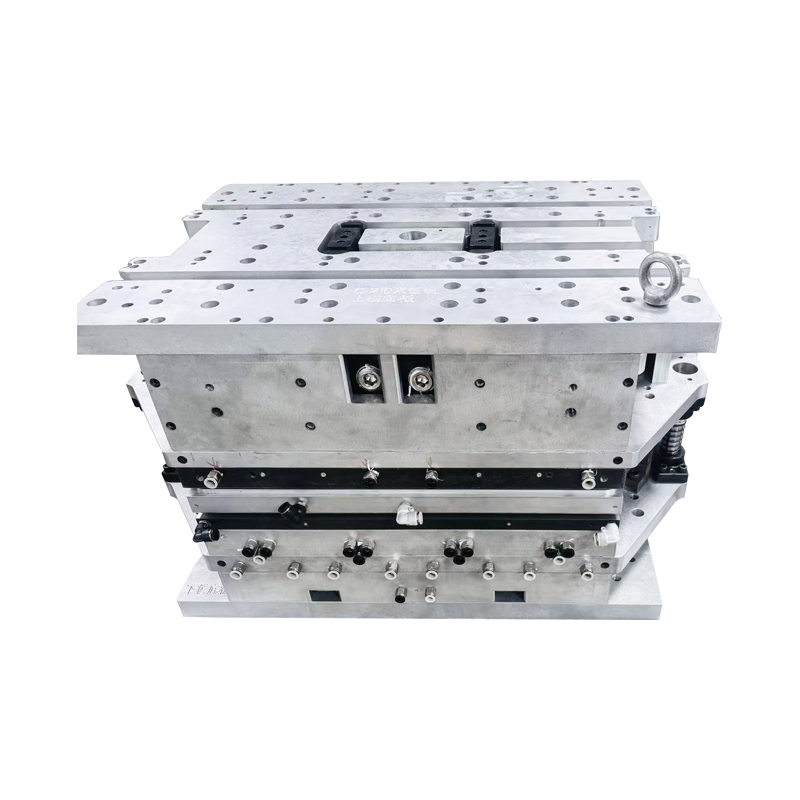
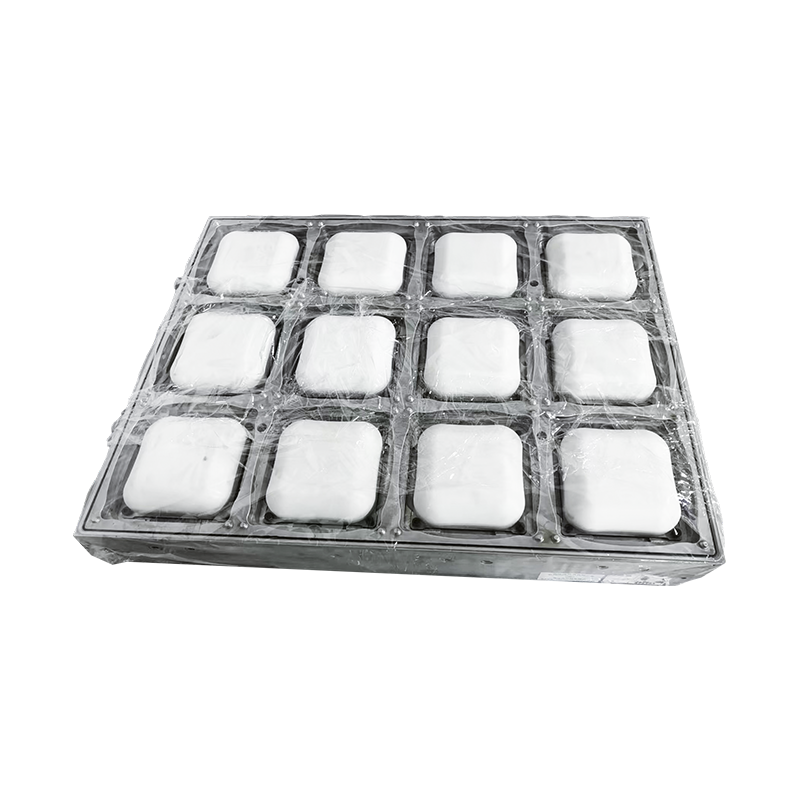
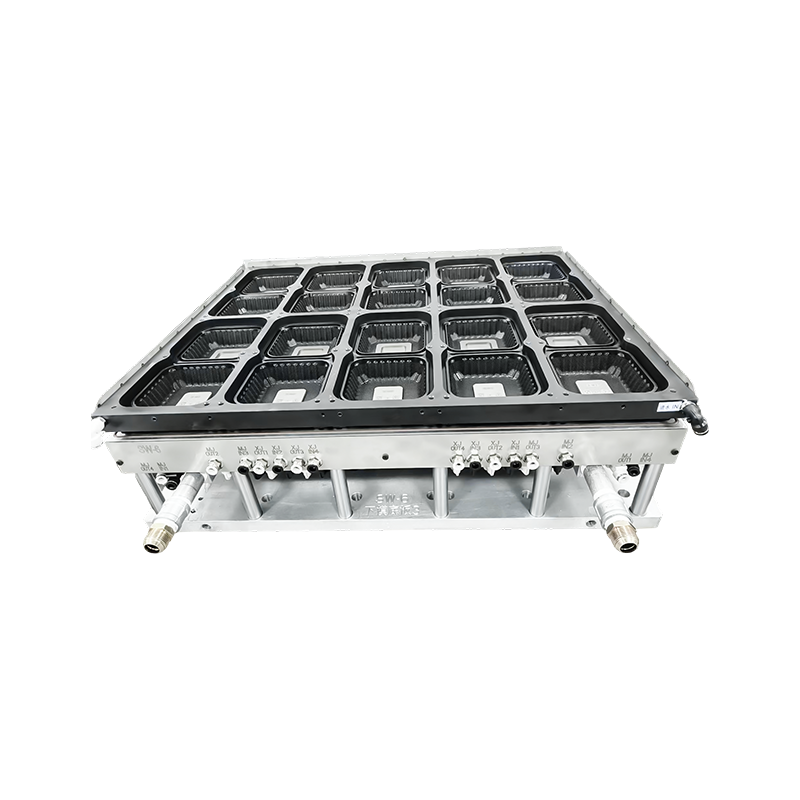
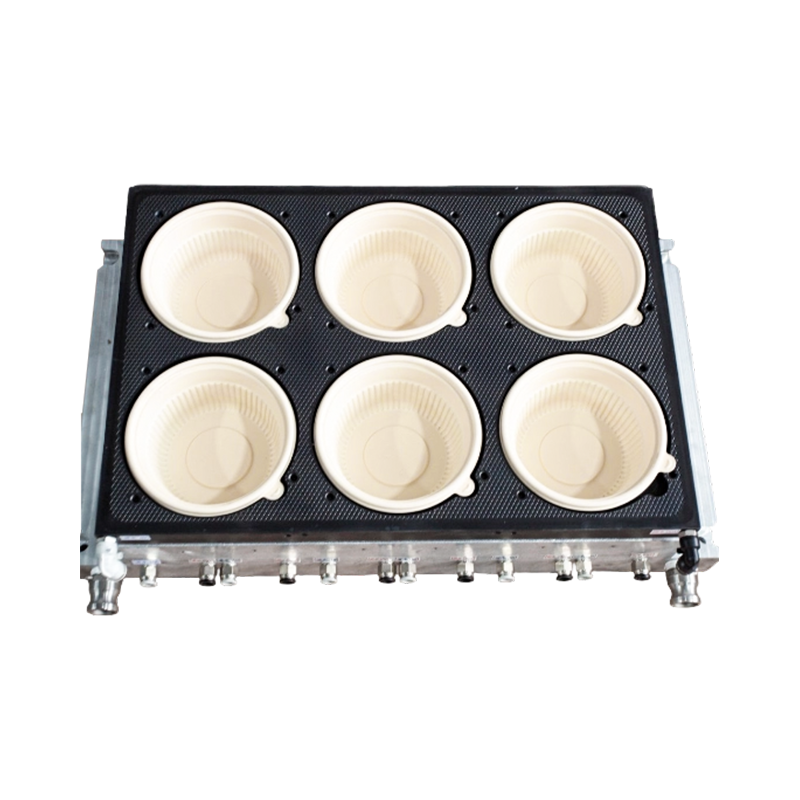
The material of the vacuum forming packaging mold itself plays a pivotal role in how the plastic shrinks. Heat transfer is the primary driver of shrinkage; the faster and more evenly a part cools, the more consistent the shrinkage will be.
Aluminum Molds vs. Resin/Wood Molds
Aluminum is the preferred material for professional-grade molds because of its high thermal conductivity. It pulls heat away from the PVC or PET sheet rapidly and uniformly. In contrast, wood or epoxy resin molds are insulators. They hold heat, which means the plastic cools slowly and may continue to shrink long after being removed from the mold. When using non-metallic molds, engineers often have to increase the shrinkage allowance by an additional 0.1% to 0.2% to account for this extended cooling period.
Technical Considerations for Male vs. Female Molds
The direction of shrinkage is just as important as the percentage. Shrinkage always occurs toward the center of the mass of the plastic. This creates different challenges depending on whether you are using a male (positive) or female (negative) mold.
Shrinkage on Male Molds
On a male mold, the plastic shrinks onto the tool. This can make part removal difficult if the mold does not have sufficient draft angles. Because the plastic is gripping the mold as it cools, the inner dimensions of the part are determined by the mold size, but the outer dimensions will be reduced. For PVC parts on male molds, a generous draft angle (typically 3 to 5 degrees) is essential to prevent the part from sticking as it tightens during contraction.
Shrinkage in Female Molds
In a female mold, the plastic shrinks away from the tool walls. This usually makes part removal easier, but it means the outer dimensions of the part will be smaller than the mold cavity. When forming PET in a female mold, the 0.6% allowance must be applied to the cavity dimensions to ensure the final outer diameter of the package is correct.
Best Practices for Engineering Precise Molds
Achieving perfection in vacuum forming requires more than just picking a percentage from a table. It requires a holistic approach to mold design. Below are the professional standards for managing shrinkage:
- Prototype Testing: For critical tolerances, always create a single-cavity prototype mold in the production material. Measure the resulting part after 24 hours to confirm the exact shrinkage for that specific geometry.
- Uniform Wall Thickness: Design the part to have as uniform a wall thickness as possible. Areas with significant thinning (deep draws) will cool at different rates and may exhibit localized warping or uneven shrinkage.
- Controlled Cooling: Use forced air or water-cooled mold bases to ensure the cycle time remains consistent. If the mold temperature creeps up during a long production run, the shrinkage values will shift, leading to dimensional drift.
- Post-Forming Measurements: Remember that plastics continue to shrink for up to 24 to 48 hours after forming. Final Quality Control measurements should only be taken once the material has fully stabilized at room temperature.
Advanced Geometry and Shrinkage Variability
Not all areas of a part shrink equally. In a deep-drawn packaging tray, the bottom of the tray (which touches the mold first) cools faster and may shrink less than the side walls, which are stretched thinner and stay hotter longer. This is known as "differential shrinkage."
When working with PET, differential shrinkage can lead to "bowing" of large flat surfaces. To counteract this, mold designers often incorporate structural ribs or slightly curved surfaces (crowns) into the mold. These features provide mechanical rigidity that resists the internal stresses caused by uneven contraction, ensuring the part maintains its intended shape even if the material's natural tendency is to warp.
Conclusion: Precision Starts with the Mold
In the competitive landscape of packaging, the margin for error is razor-thin. Understanding that PVC requires roughly 0.4% shrinkage allowance while PET requires closer to 0.6% is the foundation of professional mold design. By integrating these values with proper mold material selection, draft angles, and cooling strategies, manufacturers can produce high-quality, consistent results. A well-engineered Vacuum Forming Packaging Mold accounts for the "life" of the plastic—its expansion under heat and its inevitable contraction—to deliver a finished product that fits perfectly every time.
Frequently Asked Questions (FAQ)
Q1: Why does PET shrink more than PVC in vacuum forming?
PET has a different molecular structure and thermal expansion coefficient compared to PVC. As a semi-crystalline material, the polymer chains in PET tend to organize more tightly as they cool, leading to a greater reduction in volume and higher overall shrinkage rates.
Q2: Can I use the same mold for both PVC and PET materials?
Generally, no—not if high precision is required. Because PET shrinks approximately 0.2% more than PVC, a part formed in PET on a mold designed for PVC will be slightly too small. This can cause issues with assembly, stacking, or lid sealing.
Q3: How does the "draw ratio" affect the shrinkage of the final part?
A higher draw ratio (deeper parts) results in thinner walls. Thinner walls cool faster but are also subject to more mechanical stretching during the forming process. This can lead to increased localized shrinkage or stress-induced deformation compared to shallow-draw parts.
Q4: Does the color of the plastic sheet affect shrinkage?
While the pigments themselves have a negligible effect on physical shrinkage, dark-colored sheets absorb infrared heat faster than clear or white sheets. If the heating cycle isn't adjusted, a dark sheet might reach a higher temperature, potentially leading to slightly higher shrinkage upon cooling.