

 en
en  English
 Español
 عربى
عربى
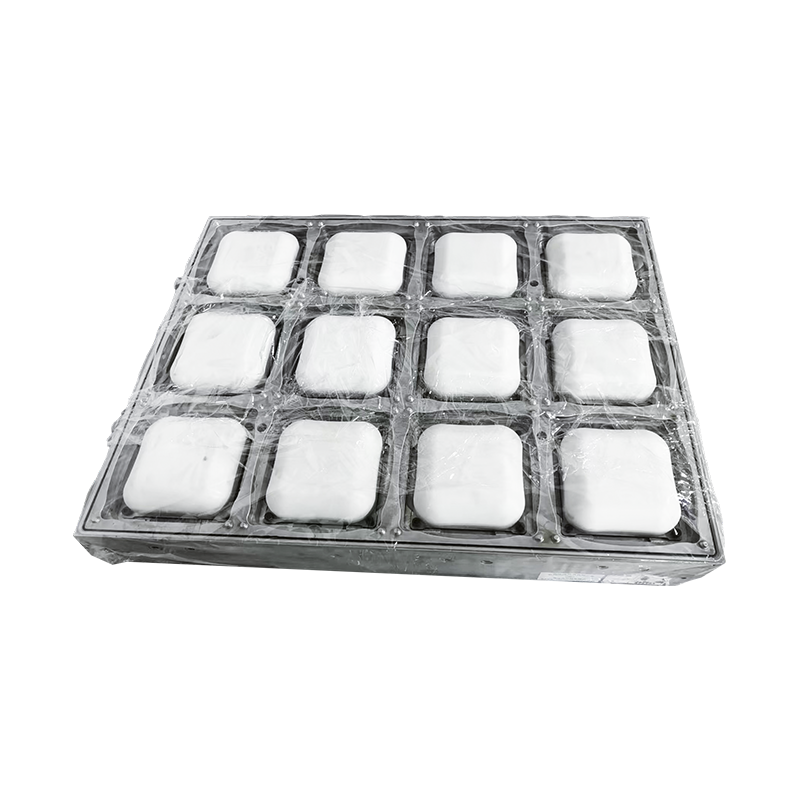
Tooling is the defining variable in vacuum forming. The machine sets the ceiling on pressure, temperature, and cycle time, but it is the mold that determines whether a finished part snaps out cleanly, holds tight dimensional tolerances, and survives a production run of tens of thousands of cycles without warping or cracking. For anyone specifying a Cup Lid Thermoforming Mold or evaluating a complete forming system, understanding what separates a precision-machined production tool from a hobbyist plug is the first practical step toward reliable output.
This guide examines tooling geometry, material selection, venting strategy, draft angle mechanics, and the cost trade-offs that define custom plastic mold decisions from short-run prototyping through high-volume automated lines.
How Vacuum Forming Tooling Works
Vacuum forming, a branch of thermoforming, works by heating a thermoplastic sheet until it becomes pliable, then drawing it down over or into a mold using differential air pressure. The tool is the negative or positive form that gives the heated sheet its final shape. Every geometric feature on the finished part traces back to a corresponding feature machined, cast, or printed into the mold.
The process applies to rigid trays, automotive interior panels, medical device housings, and a wide range of food-grade packaging components. What changes across applications is the plastic thickness, the forming temperature, the required surface finish, and therefore the tooling specification.
Positive vs. Negative Tooling
A positive (male) mold sits below the heated sheet. The plastic drapes over it, so the inside surface of the finished part contacts the tool and inherits the tool's surface texture. Draft angles must exist on every vertical face so the cooled part can lift away.
A negative (female) mold is a cavity the heated sheet is drawn into. The outer surface of the part contacts the tool. Female tooling delivers tighter outside dimensions, which matters for packaging components that must stack uniformly on filling lines. Depth-to-width ratios above 1:1 require plug-assist to pre-stretch the sheet before vacuum is applied, avoiding thin-wall failure at the base.
Tooling Materials and Their Trade-Offs
Material choice for a vacuum forming mold is driven by production volume, required surface finish, thermal cycling speed, and budget. There is no single best material; each grade has a defined operating envelope.
| Material | Typical Tool Life (cycles) | Surface Finish | Thermal Conductivity | Best For |
|---|---|---|---|---|
| Machined Aluminum (6061) | 500,000 + | Excellent | High | High-volume production |
| Cast Aluminum | 200,000 - 400,000 | Good | High | Medium-run, complex geometry |
| Kirksite (Zinc Alloy) | 50,000 - 150,000 | Good | Medium | Prototype to bridge production |
| Epoxy / Filled Resin | 1,000 - 5,000 | Fair | Low | Concept samples, short runs |
| Wood (MDF / Hardwood) | 50 - 500 | Poor to Fair | Very Low | Feasibility / DIY forming |
| 3D Printed (SLA / FDM) | 100 - 2,000 | Fair (post-finish) | Very Low | Rapid prototype validation |
Why Aluminum Dominates High-Volume Forming
Machined aluminum tools achieve shorter cycle times because their thermal conductivity is roughly four times higher than zinc alloy and more than ten times higher than filled epoxy. Faster heat extraction from the formed sheet means the part reaches demolding temperature sooner, reducing cycle time by 15 to 30 percent compared to lower-conductivity alternatives.
Aluminum also accepts deep texture etching for grip patterns and lettering, holds dimensional tolerances within 0.05 mm across typical tool faces, and can be re-surfaced or locally repaired through welding and re-machining without replacing the full tool body. For a high-cycle packaging application such as a Cup Thermoforming Mold, the initial investment in machined aluminum recovers in reduced scrap and shorter cycle costs within the first year of production.
Critical Geometry Parameters
Draft Angle
Draft angle is the taper applied to vertical walls so the cooled part releases from the tool without friction damage. Insufficient draft causes surface scratches, part distortion, and in severe cases, tool damage from forced extraction. The following ranges apply across material combinations:
- Smooth, unpainted tool surface: minimum 2 degrees of draft on all vertical faces
- Light texture (Ra 3.2 to 6.3 microns): 3 to 4 degrees minimum
- Heavy texture or fine grain: 5 degrees or more per 0.025 mm texture depth
- Undercut geometry: requires collapsible cores or split-tool design, adding cost and complexity
Corner and Fillet Radii
Sharp internal corners in a mold cavity create localized stress concentrations in the formed part and lead to webbing, thinning, or cracking at those points. Industry practice sets minimum internal corner radii at 60 percent of the nominal sheet thickness. For a 1.5 mm sheet, that means no less than 0.9 mm internal radius on any re-entrant corner.
External (convex) radii on the mold are less critical for part quality but affect material distribution. Tighter external radii draw the sheet thin over edges, which reduces structural performance in the finished tray or lid.
Depth-to-Draw Ratio
The ratio of the cavity depth to its narrowest horizontal dimension determines how severely the sheet is stretched. Ratios below 0.5:1 are straightforward; ratios between 0.5:1 and 1:1 require careful thermal profiling; ratios above 1:1 mandate plug assist or pressure forming. Exceeding the material's draw ratio without process compensation produces thin walls at the cavity base, inconsistent part weight, and elevated rejection rates.
For lidding components and shallow trays with depth-to-draw ratios below 0.6:1, single-stage vacuum forming with a matched aluminum tool typically achieves wall-thickness variation below 10 percent across the part, which satisfies most food-grade and retail packaging specifications.
Venting: The Most Overlooked Tooling Variable
When the heated sheet is drawn against the mold surface, it must displace the air trapped between itself and the tool face. If that air cannot escape fast enough, it creates a cushion that holds the sheet away from the tool, resulting in rounded corners instead of sharp ones, loss of surface texture reproduction, and visible blistering or blush marks on the finished part.
Vent Hole Sizing and Placement
Standard practice for aluminum production tools places vent holes at every corner, along the deepest draw axes, and at any recessed feature where air would naturally pocket. Vent diameter is sized to be invisible on the finished part surface: 0.5 to 0.8 mm for thin-gauge forming (under 1.5 mm sheet), scaling to 1.2 to 1.5 mm for heavy-gauge work above 3 mm. Holes larger than these limits leave witness marks that print through to the cosmetic face of the part.
Spacing between vent locations on flat mold faces typically runs 25 to 50 mm for standard-draw parts. Deep-draw tools with draw ratios above 0.8:1 benefit from tighter spacing of 15 to 20 mm in the high-stretch zones near the base and corners.
Porous Sintered Materials
An alternative to drilled vents is a sintered aluminum or bronze tool face. Porous sintered sections allow air to pass uniformly across their full face area, eliminating vent-mark patterns entirely. This approach is particularly valuable for textured surfaces where traditional vent holes would be difficult to conceal within the texture pattern. The trade-off is higher tool cost and more demanding cleaning procedures to prevent pore blocking over time.
Cooling Circuits and Cycle Time Optimization
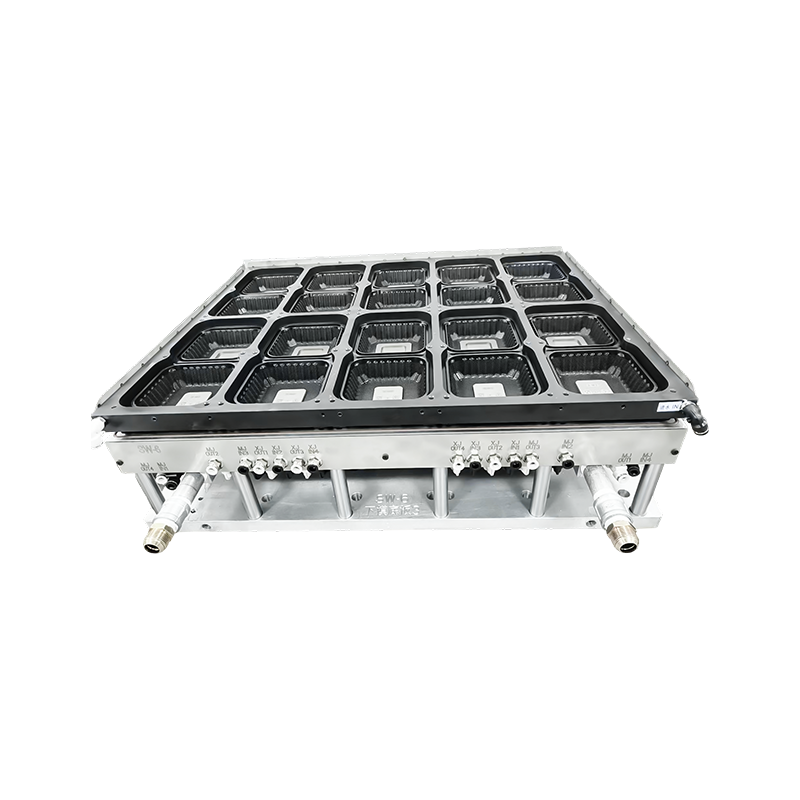
Integrated water cooling channels are a standard feature in production-grade aluminum molds. A temperature-controlled water supply maintains the mold surface at a set point, typically 15 to 40 degrees Celsius depending on the resin, which ensures the formed part cools at a controlled, repeatable rate every cycle.
Channel Routing Considerations
Cooling channels should follow the mold contour at a uniform depth from the forming surface, typically 12 to 20 mm. Channels that run too close to the surface cause uneven cooling gradients that warp the finished part. Channels that run too deep lose thermal efficiency and extend cycle time.
Multi-cavity tools require balanced cooling circuits so that each cavity cools at the same rate. Imbalanced cooling causes cavity-to-cavity weight variation in the formed parts, which becomes a reject source on automated trimming and stacking lines where weight consistency is used as a quality gate.
Custom Vacuum Forming Molds: Specification Workflow
Commissioning a custom vacuum forming mold follows a defined sequence regardless of whether the application is a prototype packaging tray or a production automotive component. Compressing or skipping steps in this sequence is the primary cause of costly re-machining requests and missed launch schedules.
Design for Manufacturability in Thermoforming
DFM review for a vacuum forming tool focuses on identifying features that will cause forming problems before any metal is cut. Common DFM flags include wall sections that are too vertical for the available draft, logo or text embossing deeper than the sheet thickness can accommodate without thinning, and cavity arrays spaced too closely together to allow adequate web material between parts on trim-in-place setups.
A thorough DFM review typically reduces first-article revision cycles from an industry average of 2.3 rounds to under 1 round for experienced tooling shops, saving weeks on the launch timeline.
Multi-Cavity Tool Design for Packaging Production
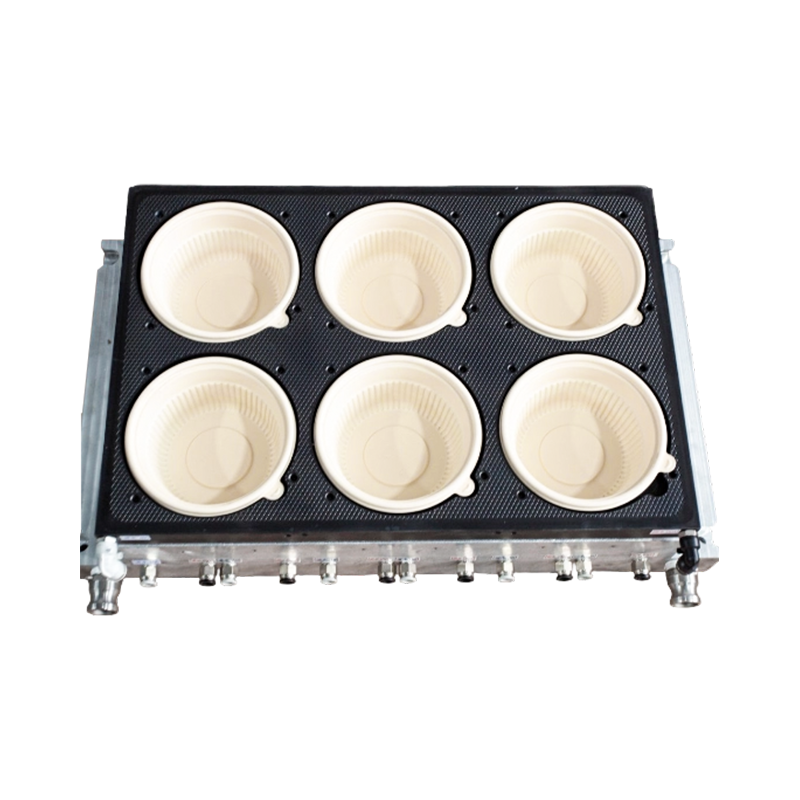
High-volume packaging lines justify multi-cavity molds because each forming cycle produces multiple finished parts, multiplying the output per machine hour without proportionally increasing labor or energy costs. The economic breakeven point shifts with part size, but for standard food-grade packaging components in the 80 to 200 mm diameter range, four-cavity to sixteen-cavity tool configurations are common on inline thermoforming lines.
Cavity Layout and Sheet Utilization
Cavity layout on a multi-cavity tool balances two competing factors: maximizing the number of parts per sheet area (sheet utilization) and maintaining enough web material between cavities to prevent the formed sheet from tearing or bridging during the draw cycle. Typical minimum web widths are:
- Standard draw ratio parts: 15 to 20 mm web between adjacent cavities
- High draw ratio or asymmetric parts: 25 to 35 mm web to prevent bridging
- In-mold trimming setups: web may be reduced to 8 to 12 mm where steel-rule dies trim to a close tolerance
Sheet utilization above 75 percent is the target for cost-efficient packaging tooling. Achieving this requires careful nesting of non-circular part footprints and, in some cases, offsetting alternate rows of cavities to interleave the parts.
Balancing Cavity Pressure
Each cavity in a multi-cavity mold must receive equal vacuum draw. Imbalanced vacuum results in cavities at the periphery of the platen forming slightly differently from cavities at the center, producing weight and dimensional variation across the part set. Balanced manifold design, with equal path lengths from the vacuum inlet to each cavity's vent circuit, is the standard solution for platens larger than 600 mm in either dimension.
Tooling Specifications by Application Segment
The correct tooling specification varies significantly across the main application segments for vacuum forming. The following overview covers the most demanding variables in each segment.
Food and Beverage Packaging
Food-contact regulations require that mold materials and surface treatments do not contaminate the formed part. Aluminum alloys used in food packaging tooling should be anodized or hard-coat anodized to prevent aluminum transfer to the plastic during forming. Release agents, where used, must be food-safe grades. Surface finish in the Ra 0.4 to 1.6 micron range is typical for lids and trays that contact food directly.
Cycle times in food packaging are aggressively optimized; inline thermoforming lines targeting 30 to 60 cycles per minute for thin-gauge lidding impose tight constraints on the cooling circuit design and vent sizing to prevent any cycle time variation that disrupts the downstream filling line.
Medical Device and Diagnostic Packaging
Sterile barrier trays and blister bases for medical devices require dimensional repeatability within 0.1 mm to ensure the lidstock seal lands on the correct geometry. Tool cleanliness is controlled through stainless steel fixturing and cleanroom-compatible release agents. Any porosity or surface crack in the mold is a contamination risk and grounds for tool rejection.
Industrial and Automotive Components
Heavy-gauge forming for automotive interior panels uses sheet thicknesses from 3 to 8 mm and requires robust aluminum tools with deep cooling channels. Wall thickness uniformity across a large automotive component can span 400 to 900 mm; achieving uniform thickness requires both plug-assist pre-stretching and carefully profiled tool temperature zones to control differential cooling across the part area.
DIY Thermoforming Tool Considerations
Small-scale producers, industrial designers, and educators working with vacuum forming machines at the 300 to 600 mm table size frequently build their own tooling from available materials. Understanding the limitations of DIY approaches prevents investing forming time in tools that cannot deliver consistent results.
What DIY Tooling Can and Cannot Do
A well-made MDF or hardwood mold with proper sealing, correctly placed vent holes, and adequate draft can produce acceptable sample parts for design review and fit testing. The limitations are thermal: wood-based tools do not conduct heat away from the formed sheet efficiently, so cycle times are two to three times longer than equivalent aluminum tools, and the mold surface temperature rises progressively through a run, causing the later parts in a session to form at slightly different parameters than the first.
3D printed tools from SLA resins post-processed to remove surface porosity can produce several hundred parts in thin-gauge PETG or PET before the tool surface begins to degrade. FDM-printed tools have visible layer lines that transfer to the part surface unless the mold is sanded and sealed, which adds labour time per tool build.
When to Transition to Professional Tooling
The decision to move from DIY or rapid-prototype tooling to professionally machined aluminum tooling is driven by volume, consistency, and cycle time requirements. As a practical benchmark:
- Under 500 parts total: DIY or 3D printed molds are cost-justified
- 500 to 5,000 parts: Cast or machined kirksite or filled epoxy tools offer a cost-effective middle ground
- Above 5,000 parts: Machined aluminum with cooling circuits delivers the lowest per-part tooling cost at scale
- Above 100,000 parts: Full production aluminum tools with balanced cooling and precision-ground cavities are the standard specification
Tooling Maintenance and Longevity
Vacuum forming tooling is a capital asset. Planned maintenance extends tool life and protects dimensional consistency. The most common causes of premature tool degradation are abrasive cleaning, thermal shock from inconsistent temperature management, and vent hole blockage that goes undetected until part quality deteriorates.
Routine Maintenance Schedule
- After each production run: Clear all vent holes with a soft brass probe or low-pressure air. Wipe the forming surface with a lint-free cloth and approved solvent to remove any plastic residue or release agent buildup.
- Weekly: Inspect the mold surface under low-angle raking light for scratches, pitting, or corrosion. Check all cooling circuit connections for leaks or flow restriction.
- Monthly: Run a surface profilometry check on high-wear areas to confirm surface finish is within specification. Document any deviation for trend analysis.
- Annually or at 250,000 cycles: Full dimensional audit against the original tool drawing. Re-machine or re-plate worn areas as indicated by the audit.
Hard-Coat Anodizing for Extended Tool Life
Hard-coat anodizing applied to a finished aluminum tool adds a ceramic-like surface layer 25 to 75 microns thick with surface hardness equivalent to a medium-grade tool steel. This treatment reduces surface wear from abrasive plastic additives (glass-filled materials, flame retardants, colorant packages) and extends tool life by 40 to 80 percent in validated production studies. The anodize layer also improves release characteristics for slightly tacky resins such as TPU and soft PVC.
Frequently Asked Questions
Q1: What is the minimum draft angle for a vacuum forming mold?
The minimum recommended draft angle is 2 degrees on smooth, polished tool surfaces. For textured surfaces, the rule of thumb is 1 degree of additional draft per 0.025 mm of texture depth, so a medium-grain texture at 0.1 mm depth requires at least 6 degrees of draft to release without surface damage. Under-drafted walls are the single most common cause of parts sticking on the tool.
Q2: How many vent holes does a vacuum forming mold need?
There is no single number; placement is governed by geometry. At minimum, place a vent at every corner, every recessed feature, and every location where air would be trapped as the sheet conforms to the tool. For flat areas on tools with draw ratios below 0.5:1, spacing vents 40 to 50 mm apart is generally adequate. High-draw areas and complex contours benefit from vents spaced 15 to 20 mm apart. The goal is to ensure no trapped air pocket is more than 20 mm from the nearest vent.
Q3: Can the same mold be used on different vacuum forming machines?
Yes, provided the mold's overall footprint fits within the platen size of each machine and the mounting bolt pattern or vacuum connection is compatible. The forming result may vary slightly between machines due to differences in vacuum pump capacity, heater element distribution, and platen flatness. First-article trials should be performed whenever a tool is moved to a new machine, even if the machine is nominally the same model.
Q4: What is plug assist and when is it required?
Plug assist is a pre-stretching step in which a shaped plug, typically made from syntactic foam or UHMW polyethylene, is driven into the heated sheet before vacuum is applied. The plug pre-distributes the material into the deep zones of the cavity so vacuum draw does not have to stretch a single area beyond its elongation limit. Plug assist is typically required when the depth-to-draw ratio exceeds 0.8:1 and when uniform wall thickness at the base of deep cavities is a product requirement.
Q5: How long does it take to manufacture a custom vacuum forming mold?
Lead time depends on tool complexity, material, and the manufacturing queue of the tooling shop. A single-cavity machined aluminum tool for a straightforward packaging component typically requires 3 to 5 weeks from approved 3D model to first article. Multi-cavity tools with integrated cooling circuits and complex geometry range from 6 to 12 weeks. Rapid-prototype tools in kirksite or filled epoxy can be completed in 1 to 2 weeks but with the volume limitations described in the material selection section.
Q6: What sheet plastics are most commonly used with vacuum forming molds?
The most widely processed materials in commercial vacuum forming are PETG, PET, HIPS, ABS, HDPE, PP, and PVC. Each has a specific forming temperature window, draw ratio limit, and shrinkage factor that must be accounted for in the mold design. PETG and PET dominate food-safe packaging applications because of their clarity, stiffness, and regulatory acceptance. ABS and HIPS are preferred for industrial trays and automotive interior components because of their impact resistance and paintability.
Q7: What is the difference between vacuum forming and pressure forming tooling?
Vacuum forming uses atmospheric pressure on one side of the heated sheet as the forming force, limited to approximately 1 bar differential. Pressure forming adds a pressurized air box on the top side of the sheet, allowing forming pressures of 3 to 8 bar. The higher pressure reproduces finer surface detail, sharper corners, and deeper textures than vacuum alone, but requires more robust tooling with sealed clamping frames and, typically, machined aluminum construction throughout. Pressure forming tools cost 30 to 60 percent more than equivalent vacuum-only tools due to the additional structural requirements.
Q8: How do I calculate the correct sheet size for a vacuum forming tool?
Sheet size must account for the clamped border consumed by the machine's clamp frame (typically 30 to 60 mm on each side), plus the material drawn into the cavities. A practical starting point is to add twice the maximum draw depth to each horizontal dimension of the cavity layout, then add the clamp border. For a cavity array 400 mm wide by 300 mm deep with a 50 mm draw depth, the minimum sheet width is approximately 400 + 100 + 120 = 620 mm. First trials should run slightly oversized sheets to confirm the draw distribution before committing to a production sheet specification.