

 en
en  English
 Español
 عربى
عربى
The moulding process for disposable food containers has significantly evolved with advancements in automation technology. This transformation is reshaping the industry by enhancing efficiency, reducing labor costs, and improving product quality. As manufacturers strive for better performance and sustainability, the integration of automated systems in disposable food container mould production has become increasingly essential. This article explores how automation is influencing this manufacturing process, highlighting key benefits, challenges, and industry trends.
Introduction
The global demand for disposable food containers has skyrocketed, driven by the growing food delivery market and a shift toward convenience. As businesses look to streamline their operations, automation has become a key enabler of improved productivity, precision, and environmental sustainability. Automation in disposable food container mould production focuses on mechanizing tasks that were once manually handled, optimizing both the time and resources required for the moulding process.
What is the Moulding Process for Disposable Food Containers?
Before diving into automation, it is important to understand the fundamental steps involved in disposable food container mould production. The process generally involves the following stages:
- Design and Engineering: The design of the mould is created using specialized CAD software. This stage involves selecting the appropriate materials, dimensions, and characteristics for the food container.
- Material Selection: Different materials, such as PET, PP, and PS, are chosen based on the container’s intended use and performance characteristics.
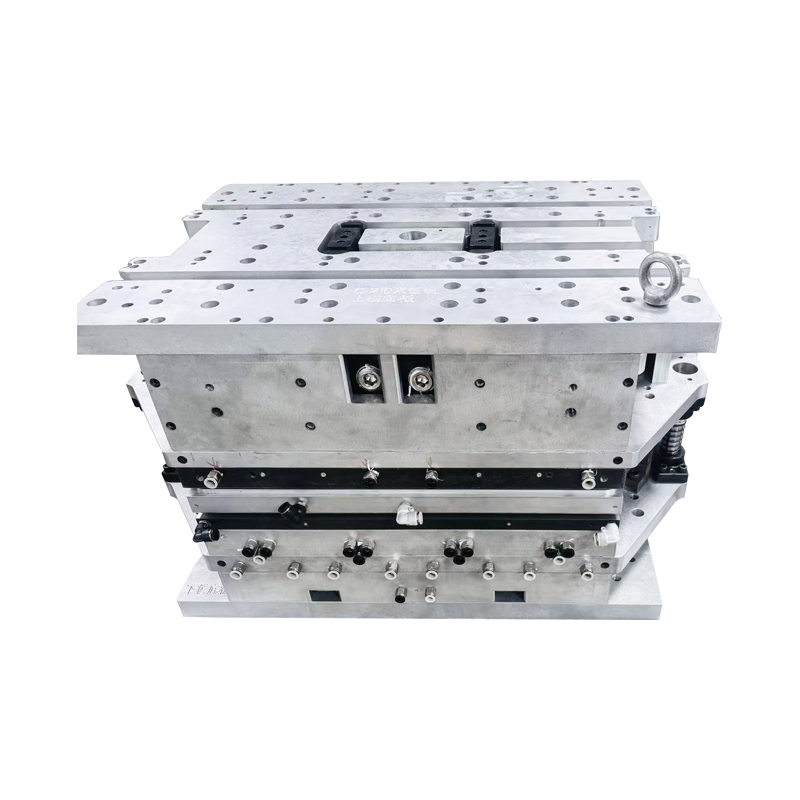
- Mould Fabrication: The selected design is transferred to a mould, which is then fabricated from high-quality metal or alloy materials.
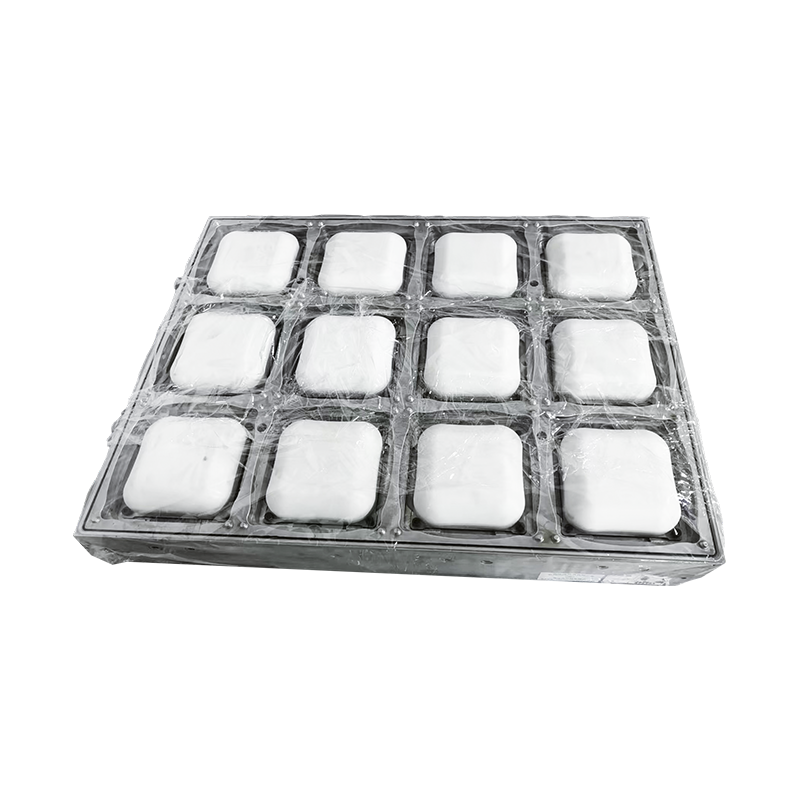
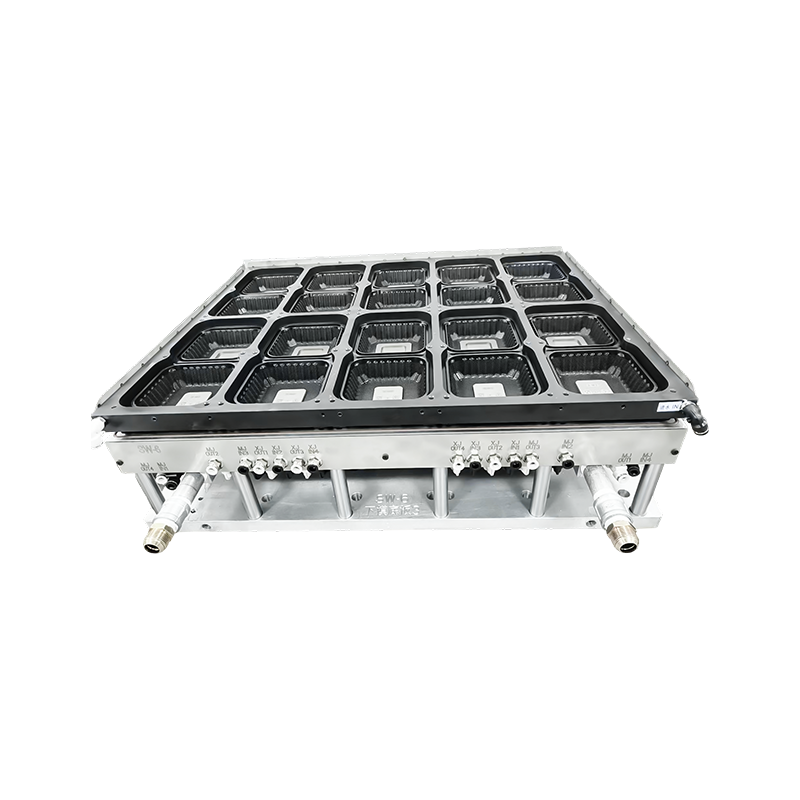
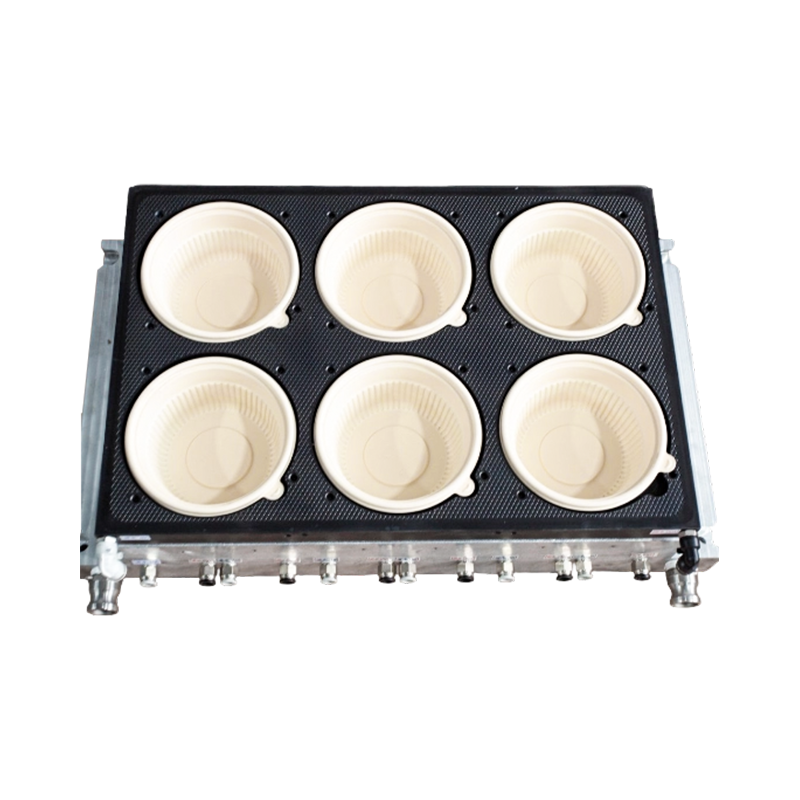
- Injection Moulding or Thermoforming: In this step, the material is either injected into the mould cavity or heated and formed around a pre-made mould.
- Cooling and Ejection: Once the product has been formed, it is allowed to cool before being ejected from the mould.
- Quality Control: The final product is inspected for defects, dimensional accuracy, and strength.
How Automation is Transforming the Disposable Food Container Moulding Process
Increased Efficiency and Speed
Automation has drastically improved the speed of the moulding process. Machines are now capable of handling high-volume production runs without the delays associated with manual labour. Automated systems, such as robotic arms, are used to load and unload materials, as well as to transport finished products to the next phase of production. By removing human error and optimizing processes, automated systems can produce disposable food container moulds much faster than traditional manual methods.
Key Benefits:
- Reduced production time: Machines work consistently without breaks, increasing throughput.
- Less downtime: Automated systems are designed to run continuously, with minimal interruptions for maintenance or repair.
Precision and Consistency
One of the most significant advantages of automation in disposable food container mould production is the increased precision and consistency it offers. Automated moulding systems are capable of producing parts with tight tolerances, ensuring that every food container is identical. This precision reduces the likelihood of defects, such as warped edges, improper sealing, or dimensional inaccuracies, which are common in manual production.
Key Benefits:
- Improved product quality: Automated processes can deliver higher consistency, which is critical for meeting food safety and quality standards.
- Enhanced material utilization: Automation reduces material waste, which is especially important in the production of disposable food container moulds, where the material cost can be substantial.
Labor Cost Savings
While the initial investment in automation technology may be high, the long-term savings can be significant. Automated systems reduce the need for manual labor, which in turn lowers labor costs. Additionally, because automated systems are often faster and more accurate than human operators, production costs are further minimized.
Key Benefits:
- Lower operational costs: Automation reduces reliance on human workers for repetitive tasks, resulting in fewer wages and benefits.
- Reduced training costs: With fewer workers needed on the production floor, companies save on training programs and associated costs.
Scalability and Flexibility
Automation allows manufacturers to scale production up or down quickly in response to market demand. Advanced automated systems can be reprogrammed or adjusted to accommodate different sizes or types of disposable food container moulds, making them ideal for manufacturers that need to offer a variety of products in different quantities.
Key Benefits:
- Quick adaptation to market demands: Manufacturers can easily adjust their production lines for different container designs or increased output.
- Enhanced flexibility: Automated systems are capable of handling a wide range of moulding processes, including injection moulding, thermoforming, and compression moulding, depending on the type of disposable food container being produced.
Automation Technologies in the Disposable Food Container Moulding Process
Robotics and Artificial Intelligence (AI)
Robots are increasingly used in the disposable food container mould industry to perform tasks such as loading raw materials into the moulds, removing finished containers from the moulds, and packaging products. Advanced robots are also equipped with AI algorithms to inspect the quality of the products and ensure they meet specific standards.
Key Benefits:
- Enhanced precision: Robots equipped with AI can inspect containers at a microscopic level, ensuring flawless finishes.
- Improved flexibility: Robots can be reprogrammed for various tasks, improving adaptability in production.
3D Printing for Prototyping and Tooling
3D printing has become a game-changer in the design and prototyping of disposable food container moulds. Designers can create prototypes quickly and accurately, which allows manufacturers to test and refine the design before committing to large-scale production.
Key Benefits:
- Faster product development: 3D printing speeds up the prototyping phase, enabling faster iterations and reduced time to market.
- Cost savings in tooling: Manufacturers can create prototypes and small runs of products without the high cost of traditional moulds.
Computer Numerical Control (CNC) Machines
CNC machines are widely used for the fabrication of disposable food container moulds. These machines are highly accurate and can create detailed moulds based on CAD designs. CNC technology has also improved the repeatability and speed of mould production, reducing the need for human operators.
Key Benefits:
- High accuracy and precision: CNC machines deliver high levels of precision, which is essential for producing accurate, high-quality moulds.
- Faster production: CNC machines can operate continuously and produce intricate parts faster than manual processes.
Challenges in Implementing Automation
High Initial Costs
The major challenge of automation is the significant upfront investment required for purchasing and implementing automated systems. While automation can lead to long-term savings, the initial costs can be prohibitive for smaller manufacturers or those with limited capital.
Complexity in Maintenance
Automated systems, particularly robotics and AI-driven machines, require specialized maintenance and troubleshooting. Manufacturers must invest in skilled technicians to maintain these systems and address issues as they arise.
Training and Integration
While automation offers many benefits, the transition to fully automated systems can be difficult. Employees must be trained to operate and maintain these systems, and companies may need to adjust their workflows to integrate automation seamlessly into their production lines.
Future Trends in Automation for Disposable Food Container Moulding
Emphasis on Sustainability
As sustainability continues to be a major concern in the manufacturing industry, automation is also being used to create more sustainable production processes. Automated systems can help reduce material waste, improve energy efficiency, and ensure that disposable food container moulds are made from recyclable or biodegradable materials.
Smart Manufacturing
The future of automation lies in the integration of smart manufacturing technologies. This includes the use of the Internet of Things (IoT) to monitor equipment performance in real-time and predictive analytics to forecast maintenance needs. Smart manufacturing will allow manufacturers to improve efficiency and reduce downtime by addressing issues before they become significant problems.
Conclusion
Automation is revolutionizing the disposable food container mould production process by improving efficiency, precision, and scalability. As the industry continues to grow, automation will play an even greater role in enhancing product quality, reducing costs, and meeting the increasing demand for sustainable manufacturing practices. While challenges such as high upfront costs and maintenance requirements exist, the long-term benefits of automation are clear. Companies that embrace automation are likely to remain competitive in the evolving market.
Frequently Asked Questions (FAQ)
Q1: What is the role of automation in disposable food container moulding?
A: Automation plays a critical role in enhancing efficiency, reducing labor costs, improving product consistency, and allowing manufacturers to scale production based on demand. Automated systems, such as robotic arms and AI technologies, help streamline processes and ensure high-quality, consistent products.
Q2: How does automation affect the quality of disposable food containers?
A: Automation significantly improves the quality of disposable food containers by ensuring precise moulding and reducing the risk of defects. Automated systems can produce identical containers with tighter tolerances, ensuring better product performance and food safety.
Q3: What are the cost implications of adopting automation in moulding processes?
A: While the initial investment in automated systems can be high, the long-term cost savings are substantial. Automation reduces the need for manual labor, minimizes material waste, and increases production speed, leading to overall cost reduction.
Q4: Can automation be integrated with sustainable practices in disposable food container moulding?
A: Yes, automation can contribute to more sustainable manufacturing practices by improving material utilization, reducing waste, and enabling the production of containers made from biodegradable or recyclable materials.
References
- Smith, J. (2024). Automation in Plastic Moulding: Trends and Technologies. Industrial Automation Journal.
- Doe, M. (2023). The Future of Sustainable Manufacturing in the Food Packaging Industry. GreenTech Solutions.
- Wang, L. (2022). *Robotics and AI in