

 en
en  English
 Español
 عربى
عربى
Overview
Thermoforming is one of the most widely adopted polymer processing methods in disposable food-service packaging, particularly for the high-volume production of plastic cup lids, trays, and containers. Unlike injection molding or blow molding, thermoforming operates by heating a thermoplastic sheet to its forming temperature and mechanically pressing or drawing it into a mold cavity — making it well-suited for thin-wall, large-surface-area components such as cup lids.
This article presents a structured, process-level breakdown of the thermoforming workflow as it applies specifically to plastic cup lid manufacturing, with emphasis on mold design considerations, material behavior, and quality control parameters. The discussion is intended for those evaluating or optimizing thermoforming systems for packaging production lines, including process planners, mold designers, and equipment specification personnel.
1. System Architecture of a Thermoforming Production Line
Before examining individual process steps, it is important to understand thermoforming as an integrated manufacturing system rather than a single-stage operation. A complete thermoforming line for cup lid production typically consists of the following subsystems:
- Sheet feeding and tensioning unit — manages roll stock infeed and maintains consistent sheet tension
- Heating zone — radiant, contact, or convection heaters that bring the sheet to forming temperature
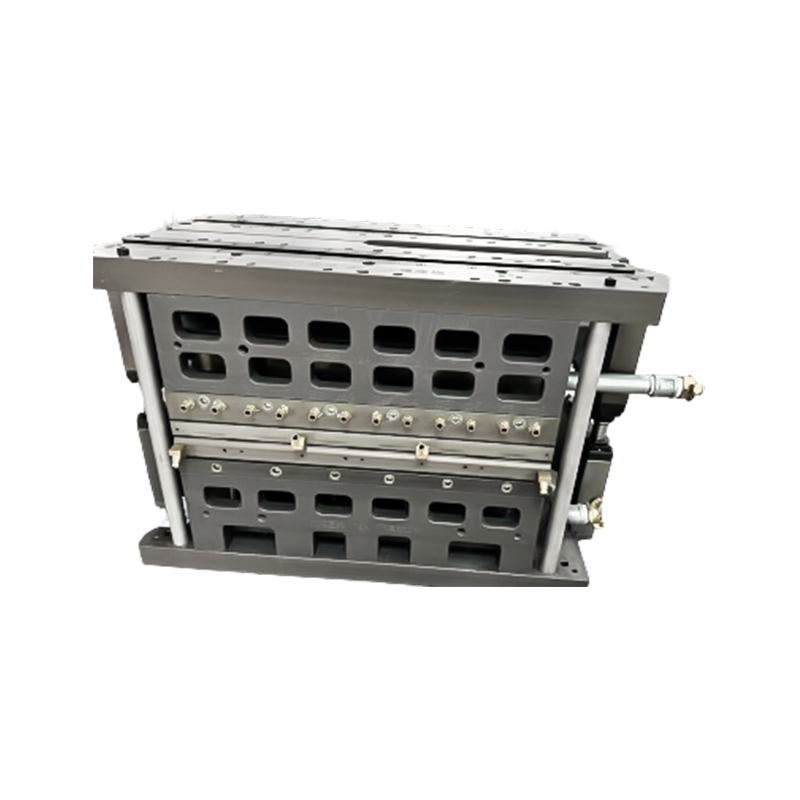
- Forming station — the press unit housing the thermoforming cup lid mold, plug assist mechanism, and vacuum/pressure circuits
- Trim station — die-cutting or punching unit that separates finished lids from the web
- Stacking and counting unit — downstream automation for product collection
- Scrap reclaim system — web grinding and regrind return loops
Each subsystem interacts directly with the others. For example, inconsistencies in sheet heating will affect forming depth and wall thickness distribution, which in turn impacts the dimensional accuracy of the lid’s sealing lip. A systems-level approach to process optimization — rather than isolated adjustments to individual stations — consistently yields better results.
2. Material Selection for Plastic Cup Lid Production
Material selection is a foundational decision that affects mold design, process parameters, downstream recyclability, and end-use performance. The following thermoplastics are most commonly processed in cup lid thermoforming applications:
2.1 PET (Polyethylene Terephthalate)
PET is the dominant material for cold-drink cup lids due to its optical clarity, rigidity, and compatibility with recycling stream infrastructure. Amorphous PET (APET) is preferred for thermoforming because it can be formed at relatively low temperatures (typically 120–160°C) without significant crystallization. However, PET is sensitive to moisture — sheet stock must be pre-dried to moisture levels below 0.02% to prevent hydrolytic degradation during heating, which manifests as surface haziness or structural weakness in formed parts.
RPET (recycled PET) has gained traction as brand owners respond to sustainability mandates. Processing RPET sheet requires careful management of intrinsic viscosity (IV) variation, which can affect melt behavior and forming consistency across a production run.
2.2 PS (Polystyrene)
General-purpose polystyrene and high-impact polystyrene (HIPS) have historically been used for hot-drink cup lids and dome-style cold-drink lids. PS processes easily, requires lower forming temperatures than PET, and holds fine detail well — making it compatible with lids featuring embossed text, vent slots, or complex snap-fit profiles. However, PS is facing regulatory pressure in several markets due to limited recyclability, and many lid producers are actively evaluating alternative materials.
2.3 PP (Polypropylene)
Polypropylene is increasingly specified for hot-beverage applications due to its higher service temperature resistance and compatibility with microwave use in some formats. PP presents greater thermoforming challenges compared to PET or PS: its forming window is narrower, it is prone to sagging and uneven heating, and it requires higher clamping forces. Specialized mold surface treatments and careful infrared heater tuning are typically required for consistent PP lid forming.
2.4 Material Comparison Summary
| Property | PET / APET | HIPS | PP |
|---|---|---|---|
| Forming temperature range | 120–160°C | 130–150°C | 150–175°C |
| Optical clarity | High | Medium | Low–Medium |
| Hot-fill suitability | Limited | Moderate | Good |
| Recyclability (current infrastructure) | Good (stream 1) | Limited | Moderate (stream 5) |
| Moisture sensitivity before forming | High (requires drying) | Low | Low |
| Wall thickness control | Good | Very Good | Moderate |
| Snap-fit / detail definition | Good | Excellent | Moderate |
3. Thermoforming Cup Lid Mold Design
The thermoforming mold is the central tooling element in the process. For cup lid applications, mold performance determines dimensional accuracy, cycle time, surface finish, and the structural consistency of functional features such as the sealing lip, drink-through aperture, and stacking lugs.
3.1 Mold Materials and Cavity Configuration
Thermoforming cup lid molds are typically fabricated from:
- Aluminum alloy (most common for production tooling): offers good thermal conductivity, machinability, and adequate tool life for high-volume runs. Aluminum molds can be thermally regulated through drilled cooling circuits, enabling consistent cycle-to-cycle temperature control.
- Cast aluminum or kirksite: used for prototype or lower-volume tooling due to lower cost and faster lead times, though with reduced dimensional precision and tool life.
- Steel-insert hybrid designs: used where specific mold features require wear resistance — for example, the trim edge zone or plug assist guides.
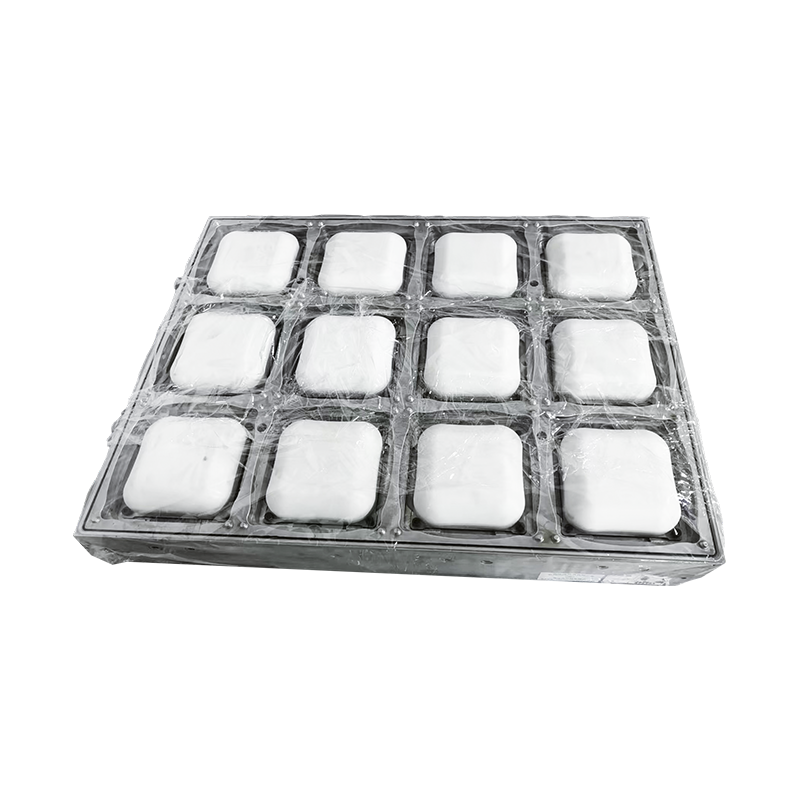
Multi-cavity configurations are standard in production environments. A typical thermoforming cup lid mold for high-volume output is arranged in a grid pattern — commonly 4×6, 6×8, or larger arrays — depending on sheet width, press capacity, and lid diameter. Cavity count directly affects output rate: at a cycle time of 2–3 seconds per forming stroke, a 24-cavity mold running at 20 cycles/minute can produce over 28,000 lids/hour.
Cavity spacing and runner geometry must account for thermal uniformity across the mold platen. Cavities at the sheet center and periphery can experience different temperature profiles during heating, leading to differential forming depth if mold temperature is not balanced. This is typically addressed through zoned cooling circuits and, in some designs, individual cavity temperature monitoring.
3.2 Cooling Circuit Design
Rapid and uniform cooling is essential for dimensional stability and cycle efficiency. For cup lid molds, the sealing lip geometry — a narrow, precision-formed annular ridge that interfaces with the cup rim — is particularly sensitive to non-uniform cooling. Differential cooling rates across the lip can cause out-of-round distortion or height variation that compromises the fit with the cup.
Cooling circuits in aluminum molds are typically designed as a serpentine or parallel-branch configuration, with coolant flow rate and temperature controlled to maintain the mold surface within a target range (commonly 10–30°C for PET and HIPS). Coolant temperature differential between inlet and outlet is monitored as an indirect indicator of heat extraction rate and cavity-to-cavity uniformity.
3.3 Plug Assist Geometry
For deeper cup lid profiles — such as dome-style lids or tall vented lids — plug assist is used to pre-stretch the heated sheet into the cavity before vacuum or pressure is applied. The plug dimensions and stroke depth are critical parameters:
- Plug diameter should be approximately 80–90% of the cavity diameter to avoid excessive thinning at the plug contact zone
- Plug material — typically syntactic foam, UHMWPE, or nylon — affects the rate of heat extraction from the sheet surface during plug contact; cooler plug materials can induce premature solidification and uneven wall thickness
- Plug entry speed is controlled to avoid sheet fracture or tearing at sharp transitions in the mold geometry
In cup lid forming, plug assist is most critical for maintaining adequate wall thickness in the dome or crown area while ensuring the sealing lip retains full material thickness.
3.4 Venting Design
Proper mold venting is necessary to evacuate air trapped between the sheet and cavity surface as forming occurs. Insufficient venting results in shallow forming, surface imperfections, or incomplete definition of fine features. Venting strategies for cup lid molds include:
- Perimeter slot vents: grooves along the cavity parting line
- Porous sintered metal inserts: placed at the base or in recesses where air entrapment is most likely
- Laser-drilled micro-vent holes: used where localized features require precise air evacuation without marks on the part surface
4. Step-by-Step Thermoforming Process Sequence
The following describes the complete thermoforming sequence as it occurs at each production cycle in a cup lid forming operation.
Step 1 — Sheet Infeed and Registration
Thermoplastic sheet stock, supplied as roll material, is fed into the machine via a motorized unwind stand. An edge guide system and tension control unit maintain lateral registration and consistent sheet tension. Sheet gauge (thickness) is a critical incoming quality parameter — gauge variation in the input sheet directly translates to wall thickness variation in formed lids. For most cup lid applications, sheet thickness tolerances of ±3–5% are specified.
Before entering the heating zone, the sheet passes through a pre-heat or conditioning station in some configurations, which reduces the temperature differential between the sheet surface and core — important for thicker-gauge materials.
Step 2 — Infrared Heating
The sheet is transported through the heating zone, where radiant infrared (IR) heaters — typically ceramic or quartz tube elements — heat the sheet from one or both sides to the target forming temperature. The heating profile is calibrated by zone to achieve a uniform temperature distribution across the sheet width and length.
Key heating parameters include:
- Heater element temperature and power output — adjusted per material type and gauge
- Heater-to-sheet distance — affects heat flux rate and temperature uniformity
- Transport speed — determines dwell time in the heating zone and therefore total heat input
For PET sheet, achieving a narrow forming temperature window (typically ±5°C across the sheet) is important to avoid localized over-stretching or under-forming. Pyrometers or thermal imaging systems are used in advanced lines for closed-loop heating control.
Step 3 — Sheet Transfer to Forming Station
Heated sheet is clamped at its edges by the chain rail or clamp frame system, which holds the sheet under controlled tension as it advances from the heating zone into the forming station. The sheet must reach the forming station before it cools below the minimum forming temperature — line speed, thermal insulation of the transfer zone, and ambient conditions all affect this parameter.
In matched-speed systems, the chain rail and sheet infeed are synchronized to prevent stretching or slack formation during transfer.
Step 4 — Forming (Vacuum and/or Pressure Assist)
Once the heated sheet is positioned over the mold cavities, the forming press closes. Depending on the mold and part geometry, the forming sequence may involve one or more of the following mechanisms:
a) Vacuum forming: Atmospheric pressure on the upper sheet surface pushes the softened material into the cavity as vacuum is drawn through vent holes in the mold. Vacuum forming is suitable for relatively shallow profiles with moderate detail requirements.
b) Pressure forming (positive pressure): Compressed air is applied to the upper sheet surface, pressing the sheet against the cavity walls with significantly higher force than vacuum alone. Pressure forming produces better surface definition and is preferred for cup lids with complex features such as raised text, tight-radius sealing lips, or interlocking snap profiles.
c) Plug assist + vacuum/pressure: As described in Section 3.3, the plug pre-stretches the sheet before vacuum or pressure is applied. This combination is standard for deeper lid profiles.
The forming dwell time — the period during which vacuum/pressure is maintained — allows the part to cool sufficiently against the mold surface to retain its shape upon release. Insufficient dwell results in spring-back or distortion after demolding.
Step 5 — Demolding and Web Advancement
After the forming dwell period, the mold opens and the formed web — now containing an array of lid shapes embedded in the surrounding skeleton sheet — is advanced to the trim station. In some mold designs, mechanical ejectors or air-blow pins assist in releasing parts from the cavity, particularly where undercut features or tight-tolerance geometries increase adhesion.
Mold release coatings (e.g., PTFE-based surface treatments) on mold cavity walls reduce demolding force and extend the interval between mold maintenance cycles.
Step 6 — Trimming and Die-Cutting
The formed web passes through the trim press, where a matched steel-rule die or precision punch set separates individual lids from the surrounding skeleton material. The trim cut must be clean and consistent — burrs, ragged edges, or excessive trim flash affect the sealing performance of the finished lid and may cause issues with downstream stacking and counting equipment.
Trim tool alignment is maintained through precision guide pins and periodic measurement of trim gap (the clearance between punch and die). For most thermoplastics, a trim gap of 1–3% of material thickness is typical.
The trim station is often the primary determinant of stacking dimensional consistency. Variation in lid diameter at the trim cut affects how lids nest in stacks and the force required to separate individual lids during dispensing at the point of use.
Step 7 — Stacking, Counting, and Packaging
Trimmed lids are collected by the stacking system — which may be mechanical, vacuum-assisted, or robotic — and formed into counted stacks for downstream packaging. Stacking consistency is important for efficient packaging line operation and for ensuring correct count-per-sleeve in retail or food-service distribution formats.
Quality sampling is typically performed at this stage, with dimensional checks (diameter, height, lip profile) conducted on a statistical basis per production lot. Vision-based inspection systems are used in higher-speed lines to detect visual defects such as incomplete forming, surface marks, or trim irregularities in real time.
Step 8 — Scrap Web Reclaim
The skeleton web remaining after trimming is granulated inline and returned to the material stream as regrind. The proportion of regrind blended with virgin sheet is controlled to manage material properties — excessive regrind content can affect optical clarity, impact resistance, and forming behavior, particularly for PET. Industry practice typically limits regrind content to 20–40% for transparent cup lid applications, though this varies by material grade and end-use specification.
5. Critical Quality Parameters in Cup Lid Thermoforming
Consistent lid quality depends on controlling a defined set of process and dimensional parameters throughout the production run. The table below summarizes the most significant quality attributes and their primary process drivers.
| Quality Attribute | Specification Basis | Primary Process Driver | Common Defect Mode |
|---|---|---|---|
| Sealing lip diameter | ±0.2–0.4 mm | Mold cavity dimension; trim accuracy | Out-of-round; excess flash |
| Sealing lip height | ±0.15 mm | Forming depth; plug assist stroke | Incomplete forming; spring-back |
| Wall thickness — dome area | Min. threshold per design | Plug geometry; material distribution | Thinning; pinhole formation |
| Optical clarity (PET/APET) | Haze % per spec | Sheet drying; heating uniformity | Cloudiness; surface haziness |
| Stacking force | N range per design | Lid diameter tolerance; stacking lug geometry | Over-tight or loose stack |
| Trim edge quality | No burr; clean cut | Trim gap; die sharpness | Rough edge; flash; incompletecircularity |
| Flatness / distortion | ≤X mm bow | Cooling uniformity; dwell time | Warpage; bow in lid face |
| Drink-through aperture | ±0.3 mm diameter | Trim punch condition | Misalignment; size variation |
6. Mold Maintenance and Lifecycle Considerations
A thermoforming cup lid mold operating at high cadence is a precision component subjected to repeated thermal cycling, mechanical load, and contact with thermoplastic materials. A structured maintenance program is essential for sustaining dimensional accuracy and production efficiency.
Routine maintenance activities include:
- Cavity surface inspection and polishing: contact zones and sealing lip profiles should be inspected for erosion, buildup, or scoring at defined intervals (typically every 500,000–1,000,000 cycles depending on material and operating conditions). Polishing compound residues must be fully removed before resuming production.
- Cooling circuit cleaning and flow verification: scale buildup in water channels reduces heat extraction efficiency, leading to increased cycle times and potential dimensional drift. Periodic descaling or closed-loop treated-water systems prevent this.
- Plug condition checks: syntactic foam or polymer plugs wear over time, altering plug geometry and the resulting wall thickness distribution. Dimensional verification of plugs against a master template should be part of the scheduled maintenance checklist.
- Trim tooling inspection: die edges should be inspected for chipping or radius wear, which affects trim quality and may accelerate plastic smearing or crack initiation in the lid edge.
- Vent hole clearing: blocked vent holes cause progressive deterioration in part quality without obvious upstream warning. A pressurized air purge or pin-clearing protocol should be applied at scheduled intervals.
Mold lifecycle is expressed in total cycles rather than calendar time. High-quality aluminum tooling with appropriate cavity counts and maintenance protocols can achieve 5–15 million cycles or more before cavity geometry requires rework or replacement.
7. Process Optimization Strategies
Optimization of a thermoforming cup lid production process typically addresses one or more of the following objectives: reducing material use (gauge reduction), increasing output rate (cycle time reduction), improving first-pass quality (defect rate reduction), or extending tool life.
7.1 Gauge Reduction Through Material Distribution Control
Cup lids are cost-sensitive components where modest reductions in average wall thickness represent significant material savings at volume. However, reducing input sheet gauge without increasing wall thickness variation or generating thin-wall defects requires precise control of heating uniformity, plug assist parameters, and forming pressure profiles. Finite element analysis (FEA) tools for thermoforming simulation are increasingly used during mold design to predict material distribution under varying forming conditions before tooling is cut.
7.2 Cycle Time Reduction
Cycle time in thermoforming is determined by the slowest sub-process — typically either heating dwell or forming/cooling dwell. Reducing cycle time without compromising part quality requires:
- Optimizing heater power profiles and minimizing temperature overshoot during rapid cycling
- Improving mold cooling efficiency through enhanced coolant circuit design or higher-conductivity mold materials
- Ensuring consistent and rapid vacuum draw-down through correctly sized vacuum reservoirs and valve timing
Even marginal reductions in cycle time compound significantly over a multi-shift production week. A 0.2-second reduction in cycle time on a 20-cycle/minute line with a 24-cavity mold equates to approximately 5,700 additional lids per hour.
7.3 Heater Profiling and Zoning
Advanced thermoforming lines allow independent control of heater zones across the sheet width and length. This enables compensation for inherent sheet gauge variation from the supplier, edge cooling effects, and differences in thermal mass between sheet center and perimeter zones. Properly profiled heating reduces forming variability without requiring tighter material specifications.
Summary
The thermoforming process for plastic cup lid manufacturing is a multi-step, interdependent system in which the performance of each stage — from material preparation and sheet heating through mold forming, trimming, and downstream handling — directly influences the quality and consistency of the finished product.
Key technical takeaways from this discussion:
- Material selection drives fundamental process parameter boundaries; PET, PS, and PP each present distinct forming behavior, and process configurations must be adapted accordingly.
- The thermoforming cup lid mold is the central tooling element, and its cavity geometry, cooling circuit design, plug assist configuration, and venting approach determine whether tight dimensional tolerances — particularly at the sealing lip — can be consistently achieved.
- The thermoforming process should be approached as an integrated system: heating, forming, trimming, and material reclaim are interdependent, and optimization at one stage can create constraints or opportunities at others.
- Structured mold maintenance programs are not optional; cavity wear, cooling degradation, and trim tool deterioration are predictable failure modes that erode quality gradually unless actively managed.
- Process optimization — whether targeting material reduction, cycle time, or defect reduction — benefits substantially from simulation-assisted mold design and real-time process monitoring.
For operations scaling from prototype to production, or transitioning from one substrate material to another (for example, from PS to PET or RPET), a systematic engineering review of each subsystem interaction is recommended before committing to tooling.
FAQ
Q1: What is the typical cavity count for a thermoforming cup lid mold in commercial production?
Cavity count varies with press size, lid diameter, and required output rate. Common configurations for standard cold-drink dome lids (approximately 90–100 mm diameter) range from 8 to 48 cavities per mold. Larger-format presses running smaller lid diameters may accommodate higher cavity counts. The decision involves balancing tooling investment, maintenance complexity, and output flexibility.
Q2: How does plug assist affect wall thickness distribution in a cup lid?
The plug pre-stretches the heated sheet into the cavity before vacuum or pressure completes the forming. This distributes material more evenly across the part depth, reducing thinning at the base or dome tip relative to vacuum-only forming. Plug geometry (diameter, tip radius, stroke depth) and plug material temperature are critical tuning parameters — incorrect plug sizing results in either insufficient pre-stretch (thin walls in deep areas) or excessive contact (cold marks or surface defects from premature heat extraction).
Q3: Why does PET sheet require pre-drying before thermoforming, while PP and PS generally do not?
PET is a hygroscopic polymer that absorbs atmospheric moisture. At elevated forming temperatures, absorbed moisture undergoes hydrolytic chain scission — breaking polymer chains and reducing molecular weight. This manifests as reduced mechanical properties, surface haziness, and inconsistent forming behavior. PP and general-purpose PS are non-hygroscopic and do not absorb moisture to a meaningful degree under normal storage conditions, so they do not require pre-drying.
Q4: What causes out-of-round distortion in thermoformed cup lids?
The most common causes include non-uniform mold cooling (differential shrinkage around the lid circumference), asymmetric vacuum draw-down across the cavity array, and trim tool misalignment or eccentricity. In PET processing, crystallization non-uniformity resulting from uneven sheet temperature can also contribute. Diagnosis typically involves mapping the distortion pattern — if it is consistent by cavity position, it points to tooling or cooling issues; if it varies randomly across cavities, process variability (heating, sheet tension) is more likely.
Q5: What is the difference between vacuum forming and pressure forming in cup lid production, and when is each used?
In vacuum forming, atmospheric pressure (approximately 0.1 MPa) is the only forming force. In pressure forming, compressed air (typically 0.4–1.0 MPa or higher) is applied to the upper sheet surface, providing substantially greater forming force. Pressure forming produces sharper feature definition, better replication of mold surface texture, and improved lid geometry for complex profiles such as interlocking snap rims or multi-flute vented lids. Vacuum forming is simpler, lower in equipment cost, and adequate for shallower, less detailed lid geometries. Most high-output cup lid lines use pressure forming or combined plug-assist with pressure forming.
Q6: How is regrind content managed in cup lid thermoforming operations?
Regrind from the post-trim skeleton web is granulated and blended with virgin sheet stock at a controlled ratio. The acceptable regrind proportion depends on the material (PET is more sensitive than PS due to IV degradation over processing cycles) and the end-use specification (particularly optical clarity requirements for transparent lids). Blending uniformity is managed through gravimetric dosing systems. In closed-loop production systems, regrind from a single material grade is kept segregated to prevent cross-contamination. Material testing — particularly melt viscosity or IV measurement for PET — is advisable when regrind proportion or source changes.
Q7: How often should a thermoforming cup lid mold be taken offline for maintenance?
This depends on cavity material, sheet material, operating temperature, and output rate. A general guideline for aluminum molds processing PET or PS is a planned inspection interval of every 500,000 to 1,000,000 forming cycles for cavity surface and cooling circuit checks. Trim tooling typically requires attention more frequently due to wear at the die edge. Many production operations schedule mold maintenance during planned production changeovers or at the end of a defined batch quantity, using cycle counters to track interval compliance.
References
- Throne, J. L. (2008). Understanding Thermoforming (2nd ed.). Hanser Gardner Publications.
- Illig, A., & Schwarzmann, P. (2001). Thermoforming: A Practical Guide. Hanser.
- European Bioplastics / Packaging Industry Technical Reports on recyclable mono-material lid structures, various years.
- ASTM International. (2019). ASTM D2911: Standard Specification for Dimensions and Tolerances for Plastic Bottles. (Reference standard for dimensional tolerance methodology applicable to rigid plastic packaging components.)
- Society of Plastics Engineers (SPE) Thermoforming Division Technical Papers — Annual Thermoforming Conference Proceedings.
- PETRA (PET Resin Association). Technical Bulletin: Processing Guidelines for APET and RPET Sheet in Thermoforming Applications.
- Gruenwald, G. (1998). Thermoforming: A Plastics Processing Guide (2nd ed.). Technomic Publishing Company.
- Rosato, D. V., & Rosato, M. G. (2012). Injection Molding Handbook (3rd ed.). Springer. (Referenced for comparative context on polymer processing fundamentals.)